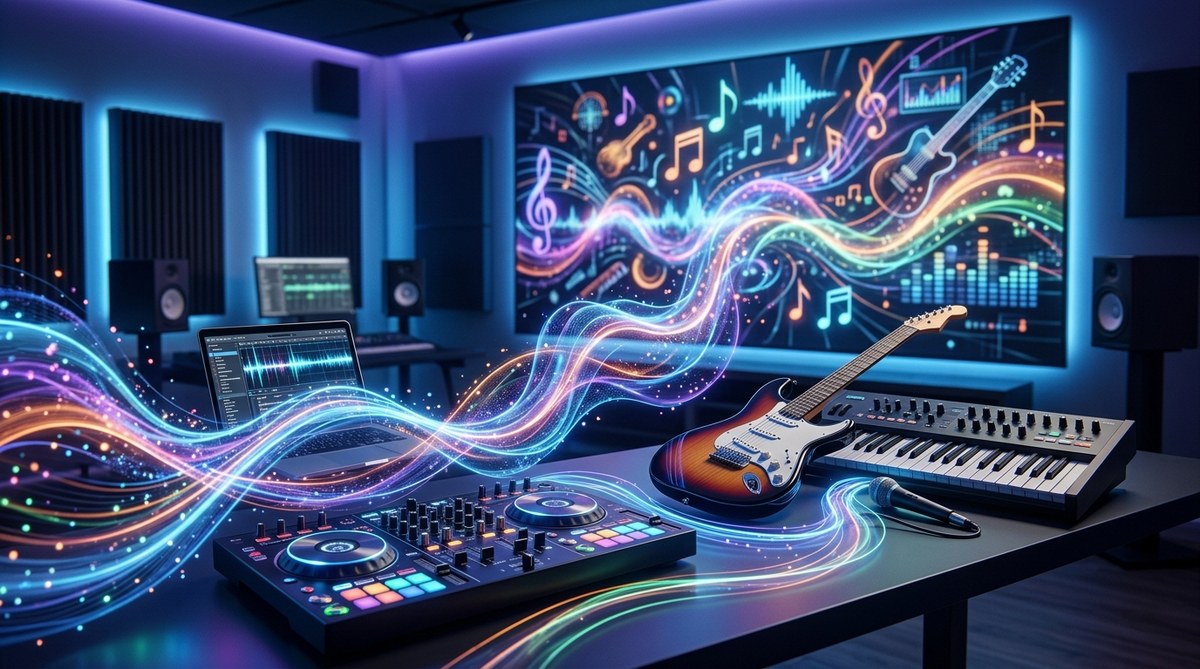
The song that stops you in your tracks this year probably won’t fit a single box. It might start with a country twang, drop into a trap beat, and float out on a house piano riff. That is not a glitch. It is the sound of music in 2026. Genre fluidity has moved from an edge case to the mainstream. Charts, streaming playlists, and radio rotations are now packed with tracks that refuse to commit to one style. For artists and producers, this shift is both liberating and demanding. The old rules about staying in your lane are gone. The new rule is simple: make something that feels true to you, even if it does not fit a category.
Genre fluidity in 2026 means listeners no longer care about categories. They want feeling, energy, and authenticity. Artists who blend styles freely are winning bigger audiences. Producers who learn to move between genres gain a serious edge. The music industry now rewards flexibility over purity. If you are making music, this is the year to break your own rules.
What Genre Fluidity Actually Means in 2026
Genre fluidity is not just a fancy term for mixing styles. It is a fundamental shift in how music is created, marketed, and consumed. In previous decades, genre was a promise to the listener. If you bought a metal album, you expected distortion and aggression. If you queued up a folk playlist, you expected acoustic guitars and storytelling. Those promises have weakened.
Today, the average top 40 song pulls from three or four distinct influences. A track might use a Latin rhythm, a hip-hop vocal delivery, and a synthwave production palette. Listeners do not get confused by this. They get excited. The algorithms that power Spotify and TikTok have trained audiences to expect novelty. A song that sounds exactly like everything else in its genre gets skipped. A song that surprises gets saved.
This trend is especially visible in the rise of artists who refuse to be categorized. Billie Eilish has moved from whisper-pop to industrial beats to folk ballads. Bad Bunny hops between reggaeton, indie rock, and electronic music on the same album. These are not outliers. They are signals of a broader movement.
Why the Old Rules of Genre No Longer Apply
The music industry used to enforce genre boundaries for practical reasons. Radio stations needed categories. Record stores needed shelf labels. Tour promoters needed to book compatible acts. Those constraints have mostly evaporated.
Streaming platforms reward engagement, not consistency. A listener who hears a song they love will stay on the platform regardless of what genre comes next. This gives artists permission to experiment. The financial risk of changing styles is lower than it has ever been.
Another factor is the global nature of music discovery. A teenager in Ohio can hear an Afrobeat track from Lagos, a hyperpop remix from London, and a country ballad from Nashville in the same scrolling session. Their musical brain develops without genre blinders. They become fluent in multiple styles naturally.
Social media also plays a role. TikTok trends do not respect genre lines. A dance challenge might use a sped-up version of a 90s rock song. A viral sound might be a lo-fi remix of a reggaeton track. The most popular audio clips on the platform are often impossible to categorize.
How Artists Are Blending Sounds Today
The mechanics of genre blending have changed. It is no longer about adding a token element from another style. Artists are weaving influences together at the DNA level. Here is how the most successful genre-fluid tracks are being built in 2026:
- Start with a core emotional idea instead of a genre template. Decide how you want the listener to feel, then pick tools from any style that serves that feeling.
- Use production techniques that bridge worlds. For example, use trap hi-hats over a house chord progression, or layer a folk vocal over a synth bassline.
- Test the track on streaming analytics early. See which playlists and algorithms pick it up. Let the data guide you toward which blend resonates most.
- Release singles without genre tags. Let the platform categorize your music algorithmically. This often leads to broader discovery than self-labeling.
This approach requires a different mindset. You have to be willing to abandon the idea of a “signature sound” if that sound is too narrow. The most successful artists in 2026 are those who treat their sound as a living thing that can grow and change.
The Role of Technology in Breaking Down Barriers
Technology is a major driver of genre fluidity. AI tools can analyze a track and suggest production elements from other styles. A producer working on a rock song can get a recommendation to add a reggaeton dembow pattern or a jazz saxophone line. These tools lower the barrier to experimentation.
Digital audio workstations now come with expansive sound libraries that span genres. A single plugin might include drum kits from trap, house, and Afrobeat. This makes it easy to pull from multiple traditions without leaving your session.
Streaming analytics also feed the trend. When artists can see that listeners who enjoy their indie rock tracks also listen to electronic and R&B, it encourages cross-pollination. The data says: your audience is already genre-fluid, so you can be too.
For a deeper look at how modern technology is reshaping music creation, check out our article on how modern technology is transforming music styles and production.
What This Means for Producers and Beatmakers
If you produce music for a living or as a serious hobby, genre fluidity changes your workflow. Here are the key implications:
- You need to expand your reference library beyond one genre. Listen to pop, electronic, Latin, and hip-hop equally.
- Your sample packs should cover multiple styles. A single project might call for 808s, acoustic guitars, and synth pads.
- Collaboration becomes more valuable. Working with artists from different scenes naturally pushes you into new territory.
- Your branding should not lock you into one style. If your producer name or logo screams “trap only,” you may struggle to release a house track later.
- Learn to move between tempos and time signatures fluidly. Genre fluidity often involves changing the feel mid-track.
The producers who thrive in 2026 are generalists with deep skills. They can program a hip-hop beat, arrange a pop chorus, and mix an electronic drop. That range is becoming the standard.
Common Genre-Blending Mistakes and How to Fix Them
Blending genres sounds great in theory but can go wrong in practice. Here are the most common pitfalls and how to avoid them.
| Mistake | Why It Happens | How to Fix It |
|---|---|---|
| Forcing elements together without cohesion | Choosing parts from different genres randomly | Pick one genre as the foundation, then add elements from others sparingly |
| Losing the emotional core | Getting distracted by genre tricks | Write the song on a single instrument first, then produce it |
| Overcomplicating the arrangement | Trying to include too many influences | Limit yourself to two or three genre sources per track |
| Ignoring tempo compatibility | Mixing genres with very different BPMs | Use half-time or double-time feels to bridge tempo gaps |
| Missing the target audience | Making a blend that pleases no one | Test rough mixes with a small group and ask what genre they hear |
The key is intention. Every genre element you add should serve the song, not just show off range. If a listener cannot tell why a certain influence is there, it probably should not be.
How to Start Making Genre-Fluid Music
You do not need to wait for inspiration to strike. You can build genre fluidity into your process. Here is a simple method to get started.
First, pick a song you love from a genre you rarely work in. Analyze its structure, tempo, and instrumentation. Now open a new project and try to recreate that structure using sounds from your primary genre. The result will be a hybrid that teaches you something new.
Second, set a constraint. Give yourself one rule: no two sections of the song can use the same genre palette. The verse might be acoustic folk, the pre-chorus could shift to lo-fi hip-hop, and the chorus might go full synthwave. This forces you to solve the puzzle of making it cohesive.
Third, study the artists who do this well. Look at how Lil Nas X, Rosalía, and Post Malone move between styles. Notice how they use production to glue disparate elements together. Reverb, delay, and consistent vocal processing can make a genre jump feel natural.
For more on how to approach production across styles, read our guide on essential techniques for achieving professional sound in home studio productions.
“The most exciting music right now comes from artists who treat genre as a suggestion, not a rule. They ask: what does this song need? And they pull from anywhere to get it.” — MIDiA Research, Sounds of 2026 Report
Why Listeners Are Driving This Change
It is easy to credit technology and artists for genre fluidity, but listeners are the real engine. Audiences in 2026 are more musically literate than any previous generation. They have access to the entire history of recorded music on their phones. They have developed sophisticated tastes that cross boundaries.
A 16-year-old today might have a playlist that includes Kendrick Lamar, Taylor Swift, Bad Bunny, and Dua Lipa. Their brain does not categorize these as different genres. They are just songs they like. This mindset makes them hungry for music that reflects their own eclectic identity.
Music that stays in one lane can feel restrictive to a listener who lives in multiple lanes. Genre-fluid tracks mirror the way people actually consume culture: in fragments, across styles, without guilt.
The Business Case for Genre Fluidity
Labels and streaming services have noticed the trend. Playlists that mix genres are among the fastest growing. Algorithmic radio stations on Spotify and Apple Music now prioritize variety over similarity. A track that blends genres is more likely to appear in multiple recommendation categories, increasing its total reach.
For independent artists, this is a massive opportunity. You do not need to fit into a narrow box to get playlist placements. You can appeal to several audiences at once. The risk of alienating fans by changing styles is lower than it used to be. Listeners follow artists, not genres.
There is also a financial angle. Genre-fluid artists can tour with more diverse lineups, appeal to multiple festival circuits, and license their music for a wider range of media. A track that works as both a pop song and an electronic instrumental has more commercial paths.
What the Next Few Years Will Look Like
Genre fluidity is not a passing phase. It is the new baseline. As AI tools get better at analyzing and suggesting cross-genre elements, the barrier to blending will disappear even further. The artists who start practicing now will have a head start.
We will likely see more genre-blind production tools. DAWs that let you say “make this section feel like reggaeton with a rock breakdown” and get a reasonable starting point. We will also see more artists releasing music without genre labels at all, letting the algorithms figure it out.
The concept of a “genre” may eventually become a historical reference, like “chamber music” or “ragtime.” A useful descriptor but not a creative constraint.
If you want to see how specific genres are evolving and influencing each other, check out our piece on exploring the influence of Afrobeat on contemporary music styles.
Your Music Deserves to Break Free
Genre fluidity is not about chaos. It is about freedom. Freedom to follow a melody wherever it leads. Freedom to use the tools from any tradition. Freedom to make music that sounds like you, not like a category.
The listeners are ready. The platforms are ready. The only question is whether you are ready to let go of the old rules. Start your next project by asking one question: what would this song sound like if it had no genre at all? Then build that.
About the Author
