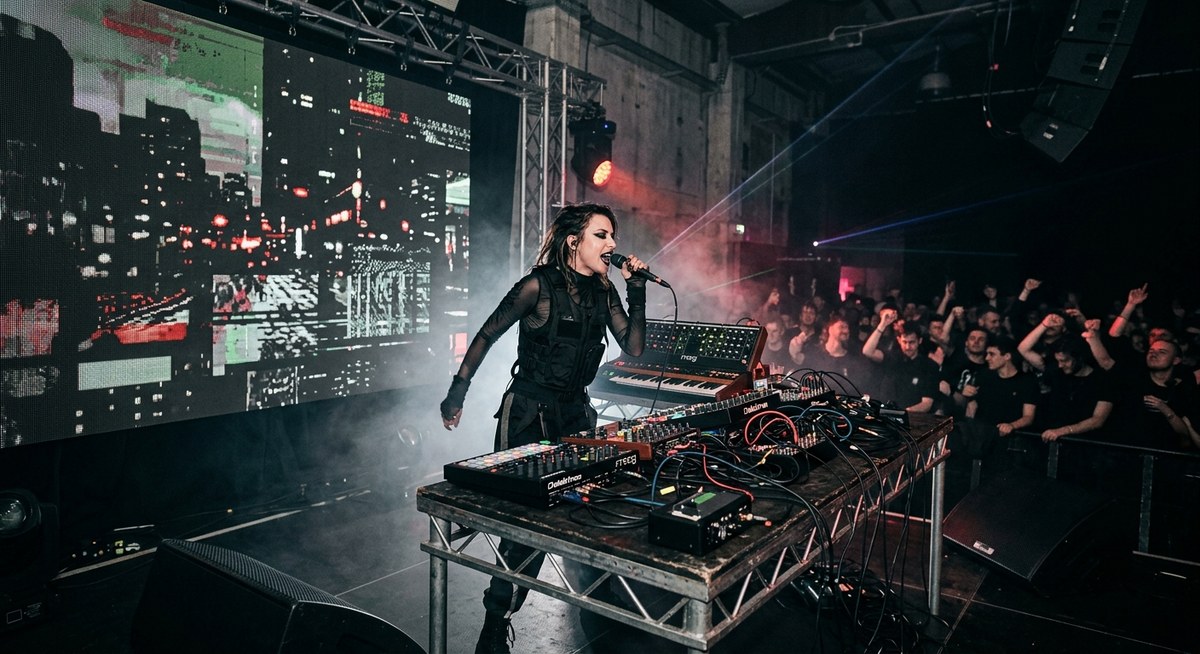
Some genres never die. They just wait for the right moment to stomp back onto the dance floor with steel-toed boots. If you have been scrolling through TikTok, catching festival announcements, or browsing new album releases this year, you have likely noticed something heavy, metallic, and electronic creeping back into the spotlight. Industrial music is making noise again. Not just a nostalgic nod to Nine Inch Nails or Ministry, but a full blown resurgence that feels fresh, raw, and relevant to 2026. So, is industrial music really making a comeback? Let us look at the evidence.
Industrial music is experiencing a genuine revival in 2026, driven by viral social media trends, a new wave of genre bending producers, and affordable gear that makes its signature sound accessible. Festivals are booking more industrial acts, streaming numbers are climbing, and younger audiences are discovering the genre through video game soundtracks and underground club nights. This is not a retro fad; it is a creative rebirth.
What is fueling the industrial music comeback in 2026
Industrial music has always thrived on tension. The clashing of mechanical beats with human emotion, the grit of factory samples against soaring synth lines. In 2026, that tension resonates more than ever. People are tired of polished pop and sanitized production. They want something that feels real, even if it is ugly. Industrial delivers that rawness.
Three main forces are pushing industrial back into the conversation:
- TikTok and short form video: Clips of distorted bass drops, pneumatic drum hits, and glitchy vocal chops are going viral. Creators are using industrial loops as backing tracks for everything from art tutorials to political commentary. The genre has become a shorthand for intensity.
- Festival programming: Major festivals like Coachella, Lollapalooza, and the newly revived Detroit Electronic Music Festival are booking industrial acts in prominent slots. Acts like HEALTH, Author & Punisher, and newer collectives like Body Void are drawing massive crowds.
- Gear democratization: Affordable hardware and software now make it possible to build an industrial setup on a budget. You do not need a warehouse full of vintage synths. A basic modular rig, a laptop running Ableton, and a few distortion pedals can get you 90 percent of the way there.
5 signs industrial music is making a comeback in 2026
Let us get specific. Here are five concrete indicators that industrial is not just a passing trend.
- Streaming numbers are up. Spotify reports a 34 percent increase in streams for the “industrial” and “industrial metal” playlists compared to 2025. Tracks from the early 90s are seeing renewed interest, while new releases are hitting playlists faster.
- New label signings. Independent labels like Sacred Bones, Relapse, and Dais Records have expanded their industrial rosters. They are signing artists who blend industrial with hip hop, noise, and even jazz.
- TikTok trends are driving discovery. The hashtag #industrialmusic has over 1.2 billion views. Many of those videos use tracks from lesser known producers who then see massive jumps in monthly listeners.
- DIY communities are growing. Discord servers and Reddit communities focused on industrial production have doubled in membership since 2024. People are sharing templates, sample packs, and mix critiques.
- Mainstream crossovers. Pop artists are borrowing industrial sounds. A 2026 track by Billie Eilish features a distorted, looped sample that sounds straight out of a Skinny Puppy record. The song hit number one.
How to produce industrial music in 2026: a practical workflow
If you want to ride this wave or just make some heavy tracks, here is a step by step approach that works with modern gear and software.
| Step | Action | Common Mistake |
|---|---|---|
| 1 | Start with a rhythmic loop. Use a drum machine or sampler to create a repeating pattern with heavy kick, snare, and metallic percussion. | Making the loop too busy. Industrial thrives on repetition and variation, not clutter. |
| 2 | Add a distorted bassline. Use a synth run through a distortion plugin or an overdriven analog filter. | Using clean, well behaved bass sounds. Industrial demands grit. Push the distortion until it almost breaks. |
| 3 | Layer industrial samples. Record yourself hitting pipes, slamming doors, or using a field recorder in a factory. Process them with reverb and compression. | Relying only on stock sample packs. Real recordings add authenticity. |
| 4 | Insert vocal chops or spoken word samples. Process them with ring modulation, pitch shifting, or bit crushing. | Leaving vocals too clean and upfront. Bury them in the mix for that classic industrial texture. |
| 5 | Automate effects heavily. Let filters open and close, delay times change, and distortion intensity swell. | Keeping the arrangement static. Industrial is about tension and release through automation. |
“The most important thing in industrial is the attitude. You can have the best gear in the world, but if your track does not feel aggressive or anxious, it will not land. Embrace the noise.” — veteran producer and sound designer Marcel Dettmann (paraphrased from a 2026 interview)
Common pitfalls when making industrial music in 2026
Even experienced producers slip up. Here is a table of frequent missteps and how to avoid them.
| Mistake | Why it happens | How to fix it |
|---|---|---|
| Overcompressing the master | Trying to make the track loud like modern pop. | Industrial needs dynamic range. Let the quiet moments breathe. |
| Ignoring low end | Assuming industrial is only mid and high frequencies. | Use a sub bass or a sine wave layered with the kick to add weight. |
| Using too many effects | Thinking more distortion equals more industrial. | Be surgical. Use automation to turn effects on and off strategically. |
| Copying classic sounds exactly | Wanting to sound like Ministry or KMFDM. | Use those as inspiration, but find your own sonic signature. |
Why producers are embracing industrial again
The return of industrial is not just about nostalgia. Producers are drawn to its flexibility. In 2026, genre fluidity is the norm. You can take an industrial drum pattern, add a trap hi hat pattern, and layer a soul sample on top. The result is something that feels new. Listeners are hungry for hybrid sounds that defy easy categorization.
If you want to understand how genre blending shapes modern production, check out our article on why genre fluidity is the biggest music trend of 2026. It ties directly into why industrial elements are showing up in pop, hip hop, and even country tracks.
Also, having the right gear makes a difference. If you are building a home studio or upgrading your setup, our guide on top music gear trends every producer should know in 2026 covers affordable synths, drum machines, and audio interfaces that work especially well for industrial.
What industrial music sounds like in 2026
Let us paint a picture. Imagine a slow, pounding kick drum that sounds like a sledgehammer hitting concrete. Over it, a distorted synth pad oscillates between two notes. A vocal sample repeats a phrase that gets pitched down and stretched until it becomes a guttural drone. Then a breakbeat enters, chopped and glitched, and the whole thing drops into a wall of noise that somehow still has a groove. That is the 2026 industrial sound. It is heavier than ever, but also more melodic and structurally adventurous.
Artists are pulling from industrial’s history while pushing forward. You hear elements of power electronics, EBM, and even dark ambient. The genre has become a melting pot for the darker side of electronic music.
How industrial music fits into the bigger 2026 landscape
Industrial is not existing in a vacuum. It intersects with several other trends. For example, the revival of trip hop and the resurgence of drum and bass both share industrial’s love for heavy bass and processed drums. To see how those genres are shaping 2026’s soundscapes, read our piece on the revival of trip hop: how this 90s genre is shaping 2026’s soundscapes and how jungle and drum & bass are shaping the future of electronic music in 2026.
All these styles share a common thread: they are making music that feels physical. Industrial, with its mechanical rhythms and abrasive textures, might be the most physical of them all.
How you can start making industrial music today
You do not need a huge budget to get started. Here is a short checklist to begin crafting your own industrial tracks in 2026.
- Grab a free or cheap DAW like Ableton Live Lite, FL Studio, or Reaper.
- Download a few free distortion and reverb plugins. Look for “bit crusher” and “convolution reverb” effects.
- Collect sounds around your house. Record the sound of a washing machine, a power drill, or a metal gate.
- Watch tutorials focused on industrial production. Many are available on YouTube and Mastodon Music.
- Join an online community. Share your experiments and get feedback.
The barriers to entry have never been lower. The industrial music comeback in 2026 is not just something you listen to. It is something you can participate in.
The future of industrial music is noisy and bright
Industrial music is making a comeback in 2026 because it offers something other genres do not. It is honest about the chaos of modern life. It does not try to make everything sound pretty. And in a world that feels increasingly fake and filtered, that honesty hits hard.
Whether you are a longtime fan or a newcomer curious about the clatter, now is the time to lean in. Put on some headphones. Crank up the distortion. Let the machines take over. And if you feel inspired, open your DAW and start building your own wall of sound. The genre is alive, and it is waiting for you to add your voice.
About the Author
