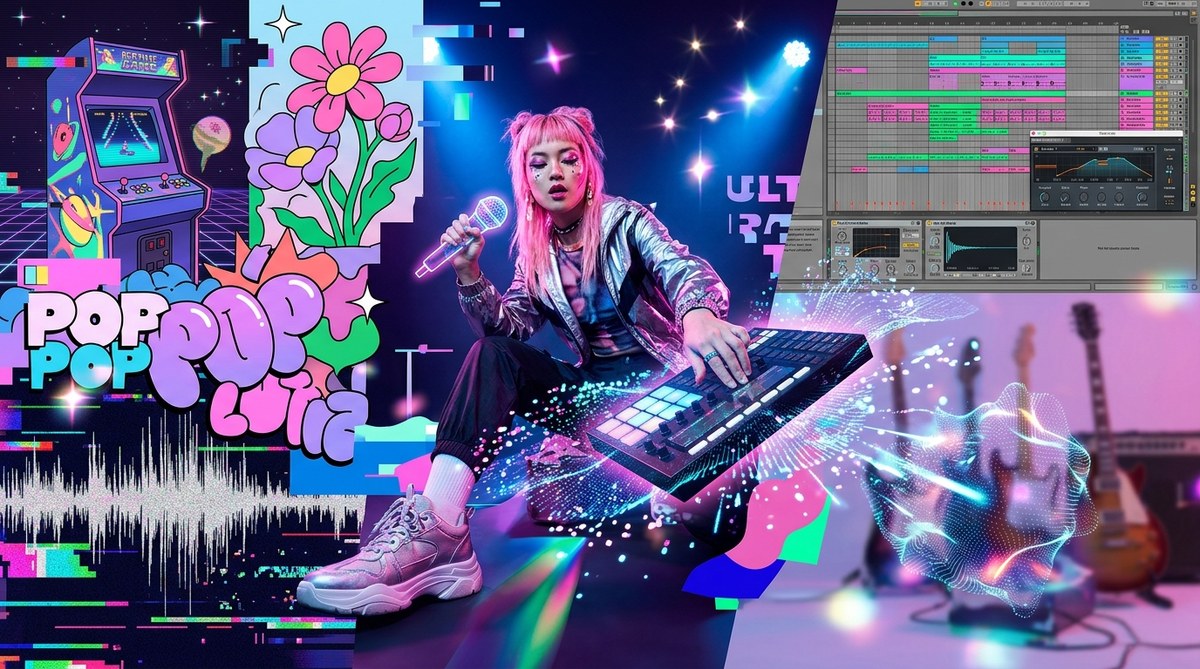
You hear it in commercials, on TikTok, and in the background of your favorite playlist. That glitchy, pitch-shifted vocal. The drum beat that sounds like a video game crashing. The melody that shifts from sugary sweet to distorted chaos in three seconds. This is the hyperpop genre, and it has quietly become the most influential force in modern music. A lot of people still call it a niche internet thing. They are wrong. In 2026, hyperpop is not a subculture. It is the blueprint.
Hyperpop isn’t just a niche genre. It’s a full-on sonic revolution that pulls from pop, electronic, hip-hop, and punk. Born online and shaped by digital communities, it rejects traditional song structures for something louder, faster, and deliberately weirder. In 2026, its influence appears everywhere from TikTok hits to mainstream radio. This guide breaks down what hyperpop is, where it came from, who the key artists are, and how you can start listening for yourself today.
What Makes Hyperpop Different
Most genres evolve slowly. Hyperpop did not. It was assembled on purpose by people who grew up with unlimited internet access. The hyperpop genre takes the catchiest parts of pop music and runs them through a blender with digital distortion, extreme pitch manipulation, and beats that change time signatures every few bars.
The result is music that feels both familiar and impossible. A hyperpop track might start with a gentle piano melody and then slam into a wall of synthesizers that sound like a corrupted MP3 file. The vocals might jump from a whisper to a shriek without warning. This is not an accident. Hyperpop artists treat the recording studio like a video game console. They push every button to see what happens.
The Core Elements of Hyperpop
If you want to recognize the hyperpop genre when you hear it, listen for these traits:
- Extreme pitch shifting in vocals (both higher and lower than natural)
- Drum sounds sourced from 90s video game consoles and ringtone samples
- Song structures that skip the verse-chorus-verse pattern entirely
- Heavy use of auto-tune as an instrument, not a correction tool
- Sudden transitions from clean to distorted audio
- Lyrics that mix sincerity with irony, often in the same line
- Production that sounds intentionally “bad” in a polished way
This list is not a rulebook. Hyperpop by nature breaks its own rules. But these elements show up consistently across the genre. Artists like SOPHIE, 100 gecs, and Charli XCX built their sounds around these ideas. Newer acts in 2026 continue to push them further.
How Hyperpop Broke Through to the Mainstream
The hyperpop genre started in online communities around 2013. The label PC Music, founded by A. G. Cook, released tracks that sounded like corporate pop music from an alternate dimension. At first, listeners did not know if it was a joke. It was not.
Charli XCX was the first major pop star to fully commit to the sound. Her 2019 album “Charli” featured production from PC Music artists and introduced hyperpop ideas to a mainstream audience. Then 100 gecs released “1000 gecs” in 2019, and the internet lost its mind. The album mixed nu-metal, ska, and bubblegum pop with production that sounded like a computer melting. It became a cult hit.
By 2022, hyperpop influences started showing up on the Billboard Hot 100. Artists like Kim Petras, Dorian Electra, and even mainstream producers working with big pop stars began borrowing the aesthetic. In 2026, the hyperpop genre is no longer a separate category. It is a toolbox that everyone uses.
Artists You Need to Know in 2026
The hyperpop genre has expanded far beyond its original circle. Here are the artists shaping the sound right now:
- 100 gecs – The duo that made hyperpop mainstream. Their 2026 tour continues to sell out venues worldwide.
- Charli XCX – The pop star who acts as a bridge between underground and mainstream. Her latest work refines the hyperpop formula for radio.
- Dorian Electra – Known for theatrical visuals and production that shifts genres every 30 seconds.
- Frost Children – A sibling duo from St. Louis pushing hyperpop into punk and metal territory.
- Alice Longyu Gao – Blends hyperpop with Chinese traditional instruments and experimental electronics.
- Hannah Diamond – A PC Music original whose 2026 album shows the softer, more emotional side of the genre.
These artists represent different corners of the hyperpop genre. Some lean toward pop hooks. Others go full experimental. All of them share the same approach: take pop music, break it, and rebuild it louder.
How to Get Into Hyperpop (A Simple Guide)
If you are new to the hyperpop genre, the sheer variety can feel overwhelming. One track sounds like a lullaby. The next sounds like a computer explosion. Here is a simple process to find your entry point:
- Start with the softer side. Listen to Hannah Diamond or early Charli XCX. These tracks have clear pop melodies with hyperpop production on top. They are easier to digest.
- Move to the middle. Try 100 gecs or Dorian Electra. These artists keep pop structures but push the production further into chaos. You will start hearing the appeal of the distortion.
- Jump into the deep end. Listen to Frost Children or Alice Longyu Gao. These tracks abandon traditional structure entirely. If you enjoy this stage, you will love the full hyperpop experience.
You do not have to like everything. Hyperpop fans often hate certain sub-styles within the genre. That is normal. Pick the lane that clicks and let your curiosity grow from there.
Common Myths About Hyperpop
A lot of people dismiss the hyperpop genre without giving it a real chance. Here are the most common misconceptions, and the truth behind them.
| Myth | Reality |
|---|---|
| Hyperpop is just noise | Hyperpop uses extreme sounds intentionally. Every distortion and glitch serves a purpose in the song’s emotional arc. |
| It is just for Gen Z | While younger listeners drive the scene, the genre draws from 90s electronic, 80s pop, and punk traditions that older fans recognize. |
| The lyrics are meaningless | Many hyperpop songs deal with heartbreak, identity, and anxiety. The chaotic production mirrors the emotional content. |
| It is a passing trend | Hyperpop has been evolving since 2013. In 2026, its production techniques are standard practice in pop music. |
| You need expensive gear to make it | Most hyperpop producers use free or affordable software. The genre values creativity over equipment. |
If you have heard one of these myths before, you are not alone. The hyperpop genre sounds challenging at first. That is by design. But once you understand the logic behind the chaos, it becomes some of the most emotional music being made today.
Why Hyperpop Matters for Music Production
Producers love the hyperpop genre because it removes rules. In traditional pop production, you follow guidelines. Keep the vocals clean. Maintain a consistent tempo. Do not distort the master track. Hyperpop throws all of that out.
“Hyperpop taught me that there are no mistakes in the studio. If a sound is too loud, make it louder. If a vocal sounds robotic, push it further. The only wrong move is being boring.”
— Underground producer and hyperpop artist
This philosophy has trickled into other genres. Trap producers now use hyperpop-style pitch shifting. Indie artists borrow the glitchy transitions. Even movie soundtracks have adopted the distorted, digital texture that defines the hyperpop genre.
If you produce music yourself, studying hyperpop will change how you think about sound. It teaches you to treat every parameter as a creative tool. Compression becomes a sound design element. Reverb becomes a storytelling device. The same approach can apply to other styles, whether you are working on trap, lo-fi, or experimental electronic. For a deeper look at how these production techniques translate across styles, check out our guide to mastering drum programming for contemporary music production.
Hyperpop and the Future of Genre
The hyperpop genre is not staying in one place. In 2026, it has already started splitting into sub-genres. Hyper-rock mixes the distorted production with live guitars and drums. Digicore focuses more on the video game aesthetic. Glitchcore pushes the sound into abstract, beatless territory.
This fragmentation is healthy. It means the core ideas of hyperpop are strong enough to support different interpretations. The genre is also influencing how we think about genre in general. Younger listeners do not care about categories. They care about energy, emotion, and surprise. Hyperpop delivers all three.
This shift in how people consume music mirrors what we see in other genres. The same way lo-fi music found its audience through streaming and study playlists, hyperpop found its audience through TikTok, Discord servers, and word-of-mouth sharing. Community built the genre, not record labels.
Where Hyperpop Goes From Here
The hyperpop genre in 2026 faces a familiar question. Can it stay weird while getting bigger? Every underground genre hits this point. Punk faced it. Grunge faced it. Hip-hop faced it. The answer is usually no, but that does not matter.
Even if hyperpop becomes fully mainstream, its DNA is already part of the broader musical language. Pop songs in 2026 use hyperpop production tricks without advertising them. The glitchy vocal chop. The sudden key change. The distorted drop. These are standard tools now.
The artists who made hyperpop will keep pushing. Some will go deeper into experimental territory. Others will cross over fully into pop stardom. Either way, the hyperpop genre has permanently changed how music sounds. You just have to listen.
Start With One Track Tonight
You do not need a full playlist to understand the hyperpop genre. Pick one artist from this guide. Listen to a single track. If you hate it, try a different artist. That is the beauty of this genre. It contains multitudes.
For listeners who want to understand where modern music is headed, hyperpop is the clearest signal. It is loud, strange, emotional, and completely sincere. Give it three minutes. You might find your new favorite sound.
And if you want to build tracks that use these same techniques, our guide on achieving professional sound in home studio productions will help you get started with the right setup.
About the Author
