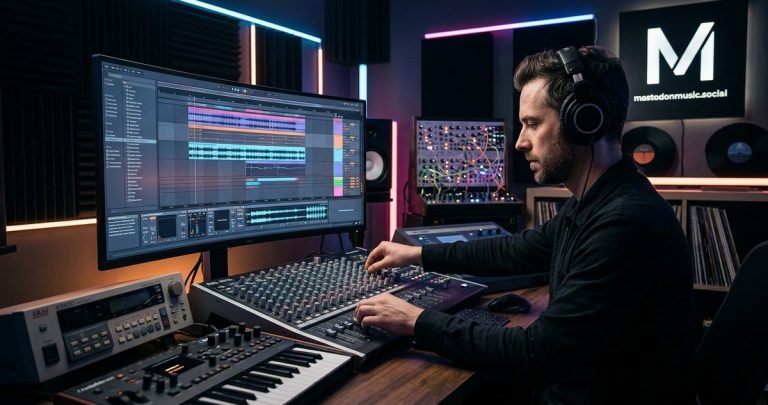
You step onto a dance floor in Los Angeles in 2026. The bass hits you in the chest. A distorted drum break loops over a funky guitar sample. A distorted voice shouts over the top. You realize it immediately: this is big beat, the sound that ruled 90s raves and video game soundtracks. It is back, and it is bigger than ever.
Big beat is experiencing a strong revival in 2026. Producers are mixing its signature heavy breaks, punchy basslines, and sampled vocals with modern production techniques. This guide covers the genre’s history, the reasons for its return, and a practical workflow to help you create authentic big beat tracks that work on today’s dance floors.
Why Big Beat Disappeared and Why It Came Back
Big beat exploded in the mid 90s. Acts like The Chemical Brothers, The Prodigy, and Fatboy Slim brought it to stadiums. It was loud, messy, and incredibly fun. But by the early 2000s, the genre faded. Why?
The main reason was oversaturation. Every commercial ad, movie trailer, and video game used the same formula: a big break, a looped vocal, and a heavy bass drop. Audiences got tired of it. Meanwhile, genres like minimal techno and deep house offered something more subtle. DJs and producers moved on.
So why is big beat 2026 electronic music making a comeback? Several factors explain the return:
- Nostalgia cycles. 90s culture is huge right now. People want the raw energy they remember from their youth.
- Genre fatigue. The dominance of clean, grid-based electronic music has created a hunger for something rougher and more human.
- New production tools. Modern DAWs and plugins make it easy to manipulate samples and breaks in ways that were impossible in the 90s.
- A new generation of producers. Artists who grew up on The Prodigy are now in the studio, and they want to put their own spin on the sound.
For a broader look at how older genres are influencing the current scene, check out our piece on the revival of trip-hop.
The Core Elements of Big Beat in 2026
Big beat is not a complicated genre. It relies on a few key ingredients. Get these right, and you are most of the way there.
| Element | 90s Approach | 2026 Approach |
|---|---|---|
| Drum breaks | Sampled from vinyl, often unquantized | Chopped and warped with Ableton or Serato, but still loose |
| Bassline | Simple synth bass or sampled bass guitar | Layered subs and mid-bass, often sidechained to the kick |
| Vocals | Shouted or spoken samples from funk, soul, or movies | Original vocal chops, pitch-shifted, or using AI stem separation |
| Structure | Verse-chorus-verse with a big drop | More fluid, but still relies on tension and release |
| Distortion | Driven through analog desks or cheap pedals | Plugin saturation (Decapitator, Saturn) with careful EQ |
The table shows one important shift. In 2026, producers have more control. You can still get that raw, blown-out sound, but you can do it without destroying your mix. The key is to be intentional about where you add grit.
How to Produce a Big Beat Track in 2026
Here is a step by step workflow to build a modern big beat track. This is the process I use, and it works for most tempos between 120 and 140 BPM.
-
Find your main break. Start with a classic drum break like “Amen, Brother” or “Think.” Load it into your DAW and chop it into one or two bar loops. Do not quantize it too much. The swing is what gives big beat its feel.
-
Layer a kick drum. Add a punchy 909 or 808 kick on the downbeats. Big beat needs a solid kick to anchor the chaos. Sidechain the rest of your mix to this kick to create that pumping effect.
-
Write a simple bassline. Use a synth like Serum or Vital. Keep it to a few notes. Big beat basslines are rarely complex. They are heavy and rhythmic. Try a pattern that follows the kick drum rhythm.
-
Add a riff or sample. This is the ear candy. It could be a guitar chop, a synth stab, or a vocal sample. Layer it over the drums and bass. Use a high-pass filter to make room in the low end.
-
Apply distortion and saturation. Put a saturator on the drum bus and the bass. Push it until it sounds aggressive, but back off before it turns into noise. Use a spectrum analyzer to check that you are not clipping.
-
Arrange the track. Build tension by stripping elements away. Bring everything back in for the drop. Big beat drops are about impact. Use risers, filter sweeps, and vocal hits to build anticipation.
For more on making your drums hit harder, read our guide on mastering drum programming.
Common Mistakes and How to Fix Them
Even experienced producers can fall into traps when making big beat. Here are the most common issues and how to solve them.
- Too much distortion. It is easy to overdo it. Your track will sound like static. Fix this by using parallel distortion. Send your drums to a bus with heavy saturation and blend it in. You get the grit without losing the punch.
- Lack of dynamics. Big beat is loud, but it should still breathe. If your track is a wall of sound from start to finish, add some silence. Use drops, breakdowns, and filter sweeps to create contrast.
- Overcomplicating the break. You do not need a 16-bar drum solo. A simple, looped break with a few variations is more effective. Focus on the groove.
- Ignoring the bass. Big beat bass is not just about volume. It is about rhythm. Make sure your bassline locks in with the kick drum. Use a tunable kick to keep the low end clean.
If you are producing in a home studio, you might find our essential techniques for professional sound helpful for getting your mix right.
The Artists Leading the Big Beat Revival in 2026
You cannot talk about big beat 2026 electronic music without mentioning the artists driving it. Here are a few names to watch.
- Sly & The Family Drone. This duo from Detroit is making waves with their hybrid of big beat and modern bass music. Their track “Kickback” is a perfect example of the 2026 sound.
- Overdrive Orchestra. Based in London, this group uses live instruments alongside electronic production. Their sets feel like a punk show mixed with a rave.
- Nova Breaks. A producer from Berlin who focuses on the darker side of big beat. Think heavy, industrial-tinged breaks with cinematic samples.
- The Breakbeat Alliance. A collective of producers who release monthly compilations. They are the best place to discover new talent in the genre.
These artists are not just copying the past. They are taking the core elements and pushing them forward. If you want to hear where the genre is heading, start with their releases.
Building a Big Beat Set for the Dance Floor
If you are a DJ, adding big beat to your sets in 2026 is a smart move. The energy is infectious, and crowds are responding. Here is how to do it right.
- Start with a warm-up. Do not open with a 140 BPM monster. Build up from 120 BPM with some funky breaks or house tracks. Let the crowd settle in.
- Use big beat as a peak-time weapon. Drop a track like “Kickback” when the energy is already high. The crowd will go wild.
- Mix with other genres. Big beat works well with jungle, drum and bass, and even techno. The key is to match the energy level, not the BPM. A 128 BPM big beat track can follow a 132 BPM techno track if the vibe is right.
- Learn to beatmatch by ear. Big beat tracks often have loose timing. Relying on sync buttons can sound messy. Practice manual beatmatching to keep the flow smooth.
For more on building genre-fluid sets, read our guide on how to build a genre-fluid setlist.
Gear and Software Recommendations for Big Beat Production
You do not need expensive gear to make big beat. But some tools make the process easier. Here are my recommendations for 2026.
- DAW: Ableton Live 12 or Bitwig Studio 5. Both have excellent warping and audio manipulation tools.
- Drum samples: Get a pack of classic breaks. The “Amen” and “Think” breaks are essential. You can find high-quality versions on sites like Splice or Loopmasters.
- Synth: Serum or Vital for basslines. Both are affordable and powerful.
- Effects: Soundtoys Decapitator for distortion, Valhalla VintageVerb for reverb, and Cableguys ShaperBox for sidechain compression.
- Hardware (optional): A used Korg Electribe or a Roland TR-808. These add analog warmth that is hard to replicate with plugins.
For a full list of essential gear, check out our top music gear trends.
The Future of Big Beat in 2026 and Beyond
Big beat is not a one-hit revival. It is settling into a permanent place in the electronic music landscape. Here is what I see happening.
“Big beat is having its moment again because it is honest music. It does not try to be cool. It just wants to make you move. That honesty is rare in 2026, and people are craving it.” – Nova Breaks, producer
The genre is also blending with other styles. Expect to hear big beat elements in pop, hip-hop, and even experimental electronic music. The loud, distorted break is becoming a tool that producers use across genres.
For producers, this means there is room to experiment. Do not feel limited by the 90s template. Add modern sound design. Use vocal processing from hyperpop. Mix in elements from jungle and drum and bass. The core is still the same: heavy breaks, big bass, and raw energy.
Your Next Steps with Big Beat
The best way to understand big beat is to make it. Start with a simple break. Add a kick. Layer a bassline. Push the distortion until it sounds dangerous. Do not worry about perfection. Big beat is about feeling, not precision.
Listen to the artists I mentioned. Study their production choices. Then open your DAW and try to create your own version. You will learn more from one finished track than from ten hours of tutorials.
If you want to stay ahead of genre trends, consider using music production podcasts to track what is coming next. The big beat revival is just one part of a larger shift in 2026 electronic music. Stay curious, keep experimenting, and keep the volume loud.
About the Author