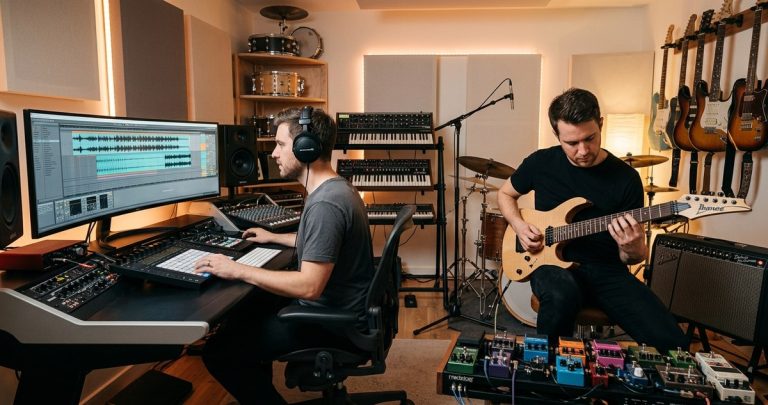
Blending the warmth of a weathered acoustic guitar with the cold precision of a 303 bassline can feel like trying to mix oil and water. One side wants to breathe; the other wants to lock into a grid. Yet some of the most exciting music in 2026 lives in that tension. The key is understanding where each element lives in the frequency spectrum and how to treat them with equal respect. This guide walks through the practical steps to get a folk fiddle sitting comfortably next to a 4-on-the-floor kick drum.
Successful folk-electronic fusion comes down to three things: carving complementary frequency spaces, using time-based effects to glue organic and synthetic sounds, and treating the folk instrument as a lead voice rather than a sample. Avoid the trap of over-processing. Let the natural imperfections of the instrument shine against the rigid electronic backdrop.
The core conflict: organic vs. synthetic
The main reason folk and electronic elements clash is transient behavior. A banjo strum has a sharp, percussive attack that decays quickly. A synthesized pad has a slow attack and a long, smooth sustain. When you layer them without thought, the banjo masks the pad’s attack, and the pad swallows the banjo’s body.
Start by analyzing the envelope of each sound. Use a transient shaper on the folk instrument to control its attack. If the instrument is too spiky, soften the attack slightly so it doesn’t cut through the mix in an ugly way. If it’s too soft, add a little attack back to help it punch through the electronic bed.
A practical workflow for blending
Here is a step-by-step process that works well for most folk-electronic hybrids. This assumes you already have a basic electronic arrangement and a recorded folk part.
- High-pass everything that isn’t the kick or bass. Folk instruments often have low-end rumble from the body of the instrument. Cut everything below 80 Hz on the fiddle, banjo, or acoustic guitar. This clears space for the kick drum and sub-bass.
- Sidechain the folk instrument to the kick. Use a gentle compressor on the folk track, triggered by the kick drum. Set a ratio of 3:1 or 4:1 with a release around 100ms. This creates a subtle “pumping” feel that locks the acoustic sound to the electronic rhythm.
- Use a mid/side EQ on the electronic elements. Widen the synth pads and narrow the folk instrument. Keep the folk sound centered and mono-compatible. Spread the electronic elements to the sides. This prevents masking and creates a wide, immersive stereo image.
- Add a shared reverb bus. Send both the folk instrument and a key synth sound to the same reverb. Use a hall or plate reverb with a decay around 2 seconds. This places them in the same acoustic space, making them feel like they belong together.
- Automate the folk instrument’s volume. In the verses, let the folk instrument sit lower in the mix. Bring it up prominently during the chorus or a breakdown. This creates dynamic interest and prevents listener fatigue.
Common mistakes and how to fix them
Even experienced producers make these errors when mixing folk with electronic. Here is a table of the most frequent problems and their solutions.
| Mistake | Why it hurts the mix | The fix |
|---|---|---|
| Too much reverb on the folk instrument | Washes out the transient detail, making it sound distant and muddy | Use a shorter decay (under 1.5 seconds) or a pre-delay of 30-40ms |
| Not tuning the folk instrument | A slightly out-of-tune fiddle clashes with synthesized chords | Use a subtle pitch correction plugin like Melodyne or even a gentle autotune |
| Over-compressing the acoustic source | Squashes the natural dynamics, making it sound lifeless | Use a slower attack time (20-30ms) to preserve the pick attack |
| Ignoring the rhythmic feel | A straight quantized folk recording feels robotic | Manually nudge some notes slightly off the grid to retain human feel |
| Boosting the same frequencies | Both the folk instrument and the synth fight for 2-4 kHz | Cut 2-4 kHz on the synth by 2-3 dB to let the folk instrument speak |
Advanced techniques for deeper fusion
Once the basics are solid, try these approaches to push the blend further.
Resampling and granular synthesis
Record a short phrase from the folk instrument. Load it into a granular synth like The Mangle or Granulator. This turns the organic recording into a textural pad that can evolve over time. You can then layer that granular texture under the original dry recording. This creates a hybrid sound that is neither fully folk nor fully electronic.
Using the folk instrument as a sidechain trigger
Instead of sidechaining the folk instrument to the kick, try the reverse. Route the folk instrument’s audio to a compressor on a sustained synth pad. Every time the fiddle plays a note, the synth ducks. This creates a rhythmic interaction where the electronic element breathes with the acoustic performance.
Parallel distortion for grit
Send a copy of the folk instrument to a bus with a saturator or tape emulation. Blend it back in at a low level (10-20% wet). This adds harmonic richness and helps the acoustic sound cut through a dense electronic mix without increasing the volume. It also gives the folk tone a subtle “electronic” edge that bridges the two worlds.
“The best folk-electronic tracks treat the acoustic instrument not as a sample, but as a lead vocalist. You would never bury a vocal under a wall of synths. Treat the fiddle or banjo with the same care. Give it space, give it presence, and let it tell the story.” — Mira Sol, producer and sound designer
Essential gear and plugins for the hybrid producer
You don’t need a massive studio, but a few tools make this process much easier.
- A good DI box or preamp: A clean signal chain preserves the folk instrument’s natural tone. The Universal Audio Apollo or a simple Golden Age Pre-73 works well.
- Transient shaper: The SPL Transient Designer or the free TDR Nova. These let you reshape the attack and sustain of any sound.
- Mid/side EQ: FabFilter Pro-Q 3 or the free Voxengo SPAN. Essential for carving space in the stereo field.
- Convolution reverb: Altiverb or the free MConvolutionEZ. These use impulse responses from real spaces, which helps blend acoustic and synthetic sounds convincingly.
- Saturator: Soundtoys Decapitator or the free Softube Saturation Knob. Adds warmth and harmonics.
For more on building a studio that supports this kind of genre bending, check out our guide on essential music gear upgrades for modern producers in 2026. And if you want to understand how genre blending is shaping the wider landscape, read about the art of genre blending: creating your own signature sound in 2026.
Building a track from scratch: a case study
Let’s walk through a real example. You have a 120 BPM electronic drum pattern with a driving kick, a sub-bass, and a shimmering pad. You also have a recording of a Celtic fiddle playing a simple melody.
- Start with the arrangement. Drop the drum and bass in. Let them play for 8 bars. Then bring the fiddle in at a low volume. Do not add any effects yet. Just listen to how they sit.
- Apply the high-pass filter. Cut the fiddle at 100 Hz. Cut the pad at 150 Hz. The kick and bass remain untouched.
- Set up the sidechain. Route the kick to a compressor on the fiddle. Set a 4:1 ratio, attack at 1ms, release at 80ms. You should hear the fiddle duck slightly with each kick hit.
- Add the reverb bus. Send both the fiddle and the pad to a plate reverb with a 1.8-second decay. Blend the return so it’s audible but not overwhelming. Around 20% wet.
- Automate for dynamics. In the first verse, keep the fiddle at -12 dB. In the chorus, bring it up to -6 dB. Add a slight boost at 3 kHz on the fiddle during the chorus for presence.
- Add a subtle parallel distortion. Send the fiddle to a bus with Decapitator. Use the “Punch” setting with drive at 2. Blend back at 15%. This adds a slight grit that helps it cut through the dense mix.
The result is a track where the fiddle feels both organic and locked into the electronic groove. It breathes with the kick, sits in the same space as the pad, and has enough presence to lead the melody.
For producers interested in other genre fusions, our piece on exploring the evolution of jazz genres in modern music offers similar techniques applied to jazz harmony. And if you are working with rhythmic folk styles, the top techniques for producing trap and hip-hop tracks can help you adapt trap beat structures to acoustic instruments.
The emotional payoff of the blend
The reason this fusion works is emotional. Electronic music provides structure, repetition, and a hypnotic pulse. Folk music provides storytelling, imperfection, and a human touch. When you combine them, you create a track that feels both timeless and futuristic. The listener gets the comfort of a familiar acoustic tone and the energy of a driving electronic beat.
This is not about making a folk song sound electronic. It is about creating a new language where both elements are essential. The fiddle is not a decoration. It is the voice. The beat is not just a rhythm. It is the heartbeat.
Final thoughts on mixing folk with electronic
Start simple. Pick one folk instrument and one electronic element. A fiddle and a kick drum. A banjo and a sub-bass. Get those two sounds to coexist before adding more layers. Use the techniques here: high-pass filtering, sidechain compression, shared reverb, and parallel distortion. Listen critically. Adjust in small increments.
The best hybrid tracks sound effortless, but they are the result of careful, deliberate choices. Respect both traditions. The folk instrument brings history. The electronic beat brings the future. Your job is to make them dance together.
Now open your DAW. Load that acoustic recording. Drop a beat underneath it. Start with the high-pass filter. Work through the steps. Your first attempt might not be perfect, but it will be a step closer to a sound that is entirely your own.
About the Author