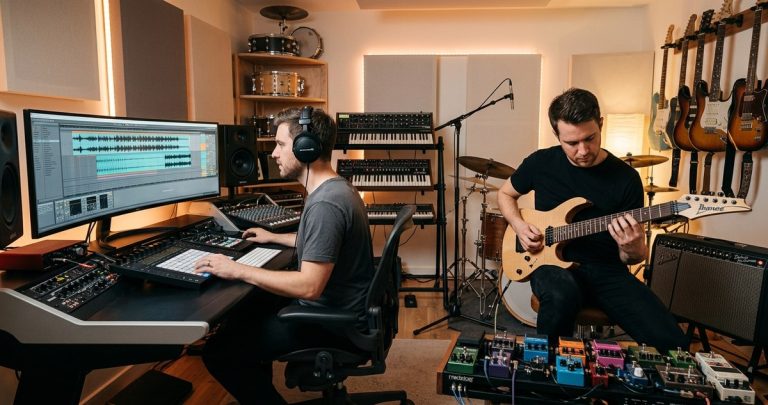
The wall of sound is back, but it doesn’t sound quite like it did in 1991. Shoegaze, the genre built on blurry guitars, whispered vocals, and a feeling of floating, is experiencing a major revival in 2026. Indie artists are not just copying the old masters. They are taking the core ideas of the genre and pushing them into new territory. Bands like Doused, Wisp, and the revived Slowdive live sets have inspired a new wave of musicians who want to create that same immersive atmosphere. But the tools and techniques have changed. If you want to understand or create the sound of the shoegaze revival 2026, you need to look at the specific methods that are defining this moment.
The shoegaze revival in 2026 is not a simple nostalgia trip. It is a creative evolution driven by seven core techniques: layered textures, midi-controlled pedal rigs, genre blending, modern production clarity, rhythmic variation, vocal submersion, and live looping. Mastering these methods will help you create the immersive sound that defines the genre today.
The Seven Pillars of Modern Shoegaze
Every revival has its own fingerprint. The shoegaze revival 2026 is defined by a set of techniques that blend the original spirit of the genre with modern production values and technology. These are the methods that separate a simple cover of “Loveless” from a track that feels fresh and current.
1. Textured Guitar Layers Over Power Chords
The old approach often relied on strumming loud, distorted power chords through a wall of effects. The 2026 method is more surgical. Artists are building textures using multiple guitar tracks, each with a different voicing and a different effect chain.
Instead of one loud guitar, you might have three or four.
– One guitar plays a simple, clean arpeggio with heavy reverb.
– A second guitar plays a single note melody with a flanger and a fuzz pedal.
– A third guitar strums a chord in an open tuning with a reverse reverb.
When you layer these, you get a sound that is wide, deep, and constantly moving. It feels less like a wall and more like a living atmosphere. This technique allows for more dynamic range. You can drop parts out to create space, then bring them all back for a massive chorus.
2. Midi-Controlled Pedal Rigs for Precise Texture Changes
Guitarists in the shoegaze revival 2026 are moving away from tap dancing on a dozen analog pedals. They are using MIDI controllers to manage their entire signal chain. A single footswitch can change your delay time, your reverb mix, and your drive level all at once.
This precision is a game changer. You can program a verse sound that is wide and wet, then switch to a tighter, more aggressive sound for the chorus without any gaps in the noise. It keeps the energy flowing and allows for more complex song structures. A MIDI rig also makes it easier to replicate your sound live, which is a big deal for touring indie bands.
3. Genre Blending with Modern Beats
Pure shoegaze can sometimes feel a bit one-note. The 2026 revival is all about fusion. Producers are taking the classic guitar textures and placing them over beats that come from hip hop, drum and bass, and even house music.
This is where the genre gets exciting. A track might start with a slow, dreamy guitar loop, and then a 160 BPM breakbeat drops in. The contrast is stunning. It keeps the shoegaze atmosphere but adds a physical energy that makes people want to move. If you are making shoegaze in 2026, do not be afraid to pull a beat from a completely different genre. It might be the thing that makes your track stand out. Check out our piece on genre blending to create your own signature sound for more ideas.
4. Modern Production Clarity over Mud
One of the biggest shifts in the shoegaze revival 2026 is the approach to mixing. Older shoegaze records were famous for being loud and messy. That was part of the charm. But the modern indie audience expects some clarity.
Today’s producers are keeping the texture but cleaning up the low end. They use sidechain compression to let the kick drum punch through the wall of guitars. They carve out space in the midrange so the vocals can breathe, even when they are buried in reverb. The goal is a sound that feels huge and immersive but still sounds good on a streaming platform or through a pair of headphones. It is a balancing act between chaos and control.
5. Rhythmic Variation and Odd Time Signatures
The classic shoegaze beat was a simple 4/4 rock groove. The 2026 revival is playing with time. Bands are experimenting with 6/8, 5/4, and even 7/8 feels. This gives the music a disorienting, floating quality that fits the genre perfectly.
Imagine a guitar riff that loops in 5/4 while the drums play a half-time feel in 4/4. The layers drift in and out of sync. It creates a tension that makes the resolution hit much harder. This technique requires tight arrangement skills, but it rewards the listener with a more engaging experience. For more on rhythm, see our guide on modern drum programming for contemporary production.
6. Vocal Submersion with Modern Tools
In shoegaze, the voice is often treated like another instrument. It is not meant to be front and center. The 2026 revival takes this idea further using modern plugins. Vocalists use heavy compression, pitch shifting, and granular delay to turn their voice into a texture.
A common trick is to run the vocal through a shimmer reverb and then sidechain it to the main guitar track. Every time the guitar hits a chord, the vocal drops in volume and becomes more blurred. When the guitar stops, the vocal swells back in. This creates a push-and-pull effect that makes the vocal feel like it is breathing with the rest of the track.
7. Live Looping for Real-Time Construction
This is a technique that is changing how shoegaze is performed live. Artists use loop stations to build their songs from scratch on stage. A guitarist might start by laying down a simple bass line with an octave pedal, then loop a chord progression, then add a melody, and finally trigger a drum machine.
This approach makes every show unique and shows off the musician’s skill. It also allows for a solo artist to create a full band sound without needing three other people on stage. It is a powerful tool for the indie musician working on a budget.
Common Mistakes in the Shoegaze Revival 2026
Knowing what to do is only half the battle. You also need to know what to avoid. Here is a table that breaks down the old habits versus the new best practices.
| Old Habit | Why It Hurts | 2026 Best Practice |
|---|---|---|
| Stacking 8 tracks of the same distorted guitar | Creates phase issues and a muddy low end | Use 3 to 4 tracks with different voicings and effects |
| Burying the vocal so it is inaudible | Makes the song forgettable | Submerge the vocal in reverb but keep the core frequency clear |
| Using a single fuzz pedal for the whole song | Lacks dynamic range | Use a MIDI rig to switch between clean, drive, and fuzz |
| Sticking to a straight 4/4 drum beat | Sounds dated and boring | Experiment with odd time signatures and breakbeat patterns |
| Mixing for loudness over clarity | Exhausts the listener | Focus on headroom and dynamic contrast |
A Practical Process for Building a Shoegaze Track in 2026
If you want to apply these techniques, here is a numbered workflow that can help you get started. It moves from the core idea to the final mix.
-
Start with a Textural Loop. Do not start with a chord progression. Start with a sound. Pick a guitar effect (like a reverse reverb or a filtered delay) and play a simple two or three note pattern. Loop it. This is your foundation.
-
Add a Rhythmic Layer. Program a drum beat that contrasts with the loop. If your loop is slow and dreamy, make the beat fast and driving. If your loop is chaotic, make the beat simple and steady.
-
Build a Bass Line. The bass in shoegaze is often overlooked. Use a synth bass or a heavily processed bass guitar. Follow the root notes of your loop, but add slides and portamento to make it feel fluid.
-
Write a Melody on a Second Guitar. This part should be distinct from the texture loop. Use a clean tone with a chorus or flanger. Keep the melody simple. A few well-placed notes are better than a busy riff.
-
Place the Vocal. Record the vocal as dry as possible. Then, apply a heavy reverb and a long delay. Use automation to push the vocal down during the verse and let it rise up during the chorus. It should feel like the voice is coming from inside the music.
-
Mix for Space. Use EQ to cut the low end from everything except the kick and bass. Use panning to spread your guitar tracks wide. Use a limiter on the master bus, but do not squash the life out of it. Leave some dynamic range.
-
Listen on Multiple Systems. Check your mix on headphones, laptop speakers, and a car stereo. If the texture disappears on small speakers, you need to adjust your midrange. If the bass is flabby on big speakers, tighten your low end.
“The biggest mistake I see in new shoegaze is trying to sound exactly like the 90s records. Those records were made with specific gear in specific rooms. You will never sound exactly like them, and you shouldn’t try. Use the tools you have to make something that sounds like you. The genre is about atmosphere, not replication.” — Indie producer and engineer, Maya Reeves
The Gear That Fuels the Revival
While technique is more important than gear, some tools are helping to shape the shoegaze revival 2026. For the guitarist, a multi-effects unit like the Line 6 HX Stomp or a dedicated MIDI controller like the Morningstar MC6 is almost essential. These allow for the kind of preset switching that defines the modern sound.
For producers, the focus is on plugins that create space and texture. Valhalla Shimmer is a classic for a reason. Newer tools like the Baby Audio Parallel Aggressor are great for adding drive to individual layers without ruining the mix. If you are building a home studio, focus on getting a good audio interface and a pair of open-back headphones. You can read more about essential gear upgrades for modern producers to see what fits your setup.
The Future of the Wall of Sound
The shoegaze revival 2026 is not a fleeting trend. It is a sign that listeners and artists are hungry for music that prioritizes feeling over perfection. The techniques we covered are not rules. They are starting points. The genre is still being written, and the next great shoegaze album might come from a bedroom producer who mixes these ideas in a way no one has tried before.
So grab your guitar, open your DAW, and build a wall of sound that is entirely your own. Start with a single texture, add a beat that surprises you, and let the atmosphere guide the song. The genre is alive and waiting for your voice.
About the Author