The last thing any producer wants is to spend two weeks crafting a beat in a style that peaked six months ago. Genre cycles move fast. A sound that feels raw and exciting on release can start feeling overplayed within a single season. But there is a group of people who consistently notice these shifts before they show up on playlist charts or YouTube trending pages. Most of them host podcasts. Music production podcasts are one of the most underrated tools in a producer’s toolkit, and not because of the obvious technical tips. The real value is their cultural intelligence. Hosts who are embedded in scenes, talking directly to artists and engineers, often have their ears on something new before anyone is tagging it on social media.
Trend Radar
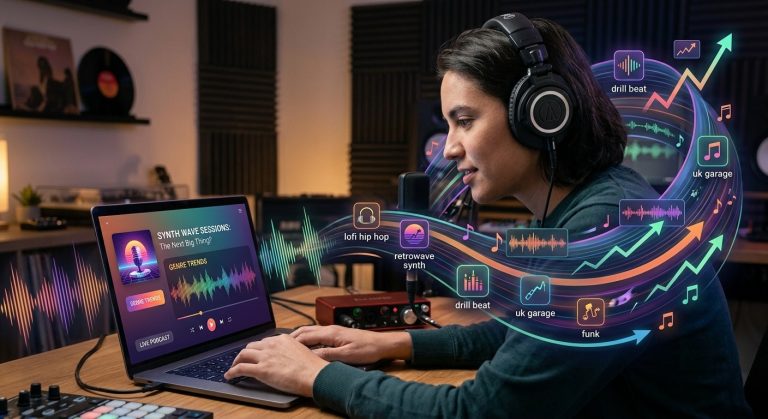
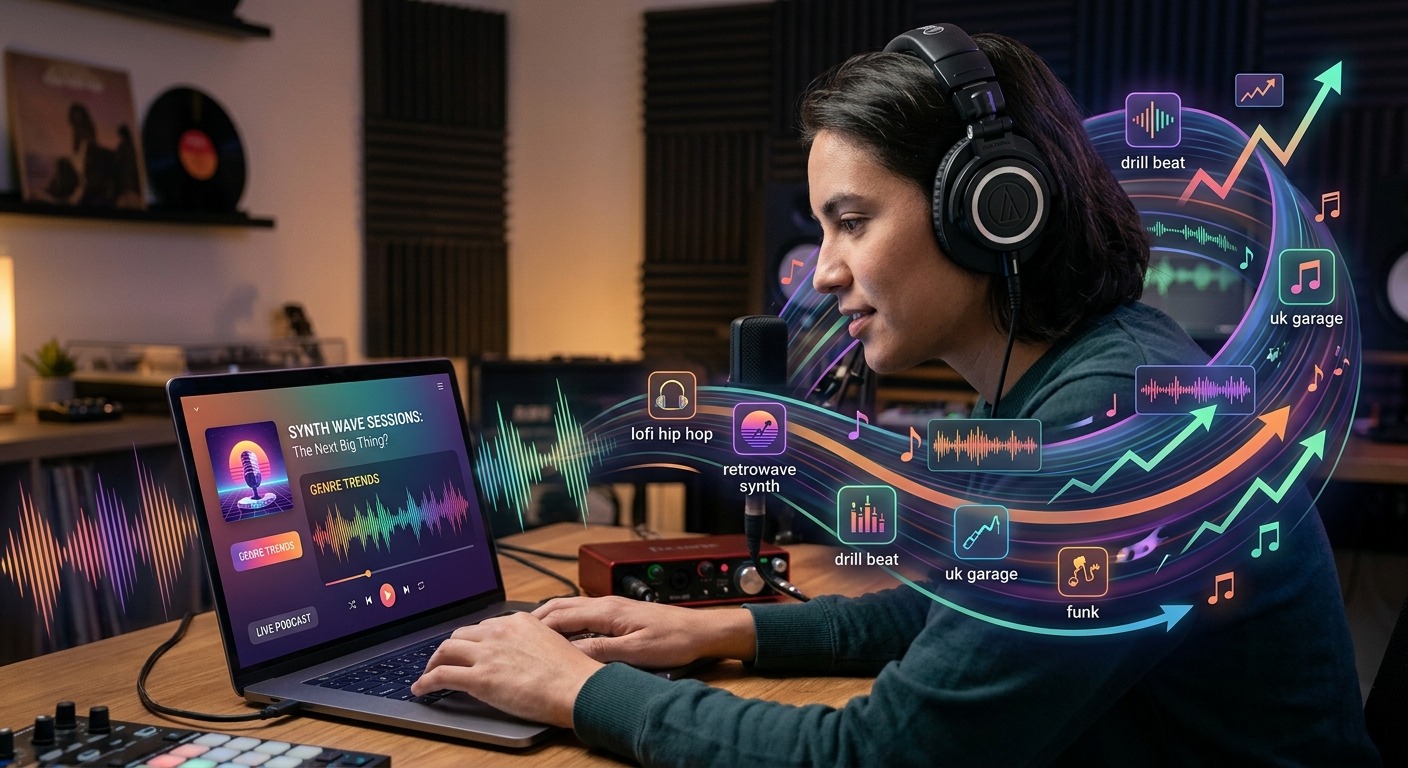
Music production podcasts routinely surface genre movements months before streaming algorithms catch up. Hosts who talk directly to working producers pick up cultural signals no dataset has registered yet. By following a small set of shows, building a searchable reference library from key episodes, and translating what you hear into DAW experiments, you can position your production style ahead of the curve rather than scrambling to catch it after everyone else has already moved in.
Why Podcast Hosts Catch Genre Shifts Before the Algorithm Does
Streaming algorithms surface what is already popular. They measure listens, saves, and shares after the fact. A genre needs critical mass before any platform will push it toward new ears. Podcast hosts operate on a completely different timeline. They book guests based on who they personally find interesting right now, not who is trending. A host interviewing a club DJ from an emerging scene in Manchester or a beatmaker building music in a Lagos studio is accessing cultural information that no dataset has catalogued yet.
This is a fundamental advantage. A podcast episode recorded six weeks ago about a producer making music that “doesn’t have a name yet” is exactly the kind of signal that predicts what will have a genre name, a Spotify category, and a wave of imitators in another six months. The informal, conversational format matters too. Artists say things in podcasts they would never put in a press release. You hear what gear they picked up recently, what music they have been listening to privately, and what creative problems they are trying to solve. These details are the raw material of trend forecasting.
The Shows That Surface Niche Sounds Consistently
Not every music podcast has this quality. Some are too polished, too focused on established names, or too anchored in legacy genres to be useful for spotting what is coming next. The shows that work best for trend-spotting tend to have hosts with genuine curiosity about underground music, consistent access to working producers rather than just celebrity artists, and a willingness to feature guests whose names most listeners won’t recognize yet.
Song Exploder is excellent for deconstructing how finished records are built, including the surprising genre mashups that drive new sounds. Tape Notes, a UK-based podcast, goes deep on the technical and creative process with producers who are often working in genres still finding their identity. Sidechain, produced by Native Instruments, covers the intersection of music technology and production culture and frequently surfaces trends in how tools are being used in unconventional ways. Switched On Pop takes a musicology angle, breaking down structural and sonic elements of songs across genres, which helps you understand the building blocks of emerging styles before they become codified.
Music Production Podcasts Compared for Trend-Spotting Value
| Podcast | Primary Focus | Trend-Spotting Strength | Best For |
|---|---|---|---|
| Song Exploder | Track-by-track deconstruction | Medium | Understanding production techniques inside genre-blending records |
| Tape Notes | In-depth producer interviews | High | Catching underground UK and European genre movements early |
| Sidechain (NI) | Music tech and production culture | High | Spotting tools and techniques that define a genre before it has a name |
| Switched On Pop | Musicology and sonic analysis | Medium | Breaking down the structural DNA of genres before they go mainstream |
| Music Production Podcast | Technique tutorials and gear | Low to Medium | Building technical skills in production styles already gaining traction |
Building a Listening Routine That Actually Sharpens Your Ear
Passive listening won’t get you far. You can spend hours with a podcast playing in the background and absorb almost nothing useful. The producers who get the most from podcast listening treat it as active work. That means having a notes app open, pausing when something interesting comes up, and deliberately connecting what you hear to your own production context.
A workable routine involves picking two or three shows and setting a weekly listening slot of around 90 minutes. This is not a massive time commitment. You are not trying to consume everything. You are listening for signals. These signals include:
- A guest mentioning a genre, scene, or city that has not crossed into mainstream music media yet
- A host or guest describing a sound as having “no real label” or being “hard to categorize”
- References to specific plugins, samples, or hardware that the guest says is central to a new style they are building
- Mentions of artists the host is “really excited about right now” that you have never heard of
- Descriptions of tempo, rhythm, or tonal qualities that sound unfamiliar in combination
- Geographic references to scenes that have not been documented widely in English-language music press
Each of these is a thread worth pulling. When you hear one, note it down and follow up later. Search for the artist mentioned. Find the scene being described. Try to locate the reference tracks the guest talked about. This follow-up is where the real learning happens.
Turning Standout Episodes Into a Searchable Reference Library
Here is a problem every engaged podcast listener faces. You remember that a specific episode had a great discussion about a particular technique or emerging genre, but you cannot remember which episode it was or exactly what was said. You end up re-listening to thirty minutes of content to find a two-minute segment. This is where most producers waste time they could be spending in their DAW.
The fix is to build a searchable text archive of your most valuable episodes. Tools designed for podcast to text conversion handle long-form audio well, turning a dense one-hour interview into a scannable document in minutes. Once you have the transcript, paste it into a note-taking app, a searchable document folder, or a plain text file. When you want to find every mention of “UK drill production,” “tape saturation,” or a specific artist name across your archive, a simple search returns the exact passage in seconds.
This approach transforms your podcast listening from passive consumption into a structured knowledge base. Over a year of active listening, you will build a reference library that captures the cultural and technical conversations happening in music production at a level of specificity no book or course can match. The episodes where a producer describes a genre that did not exist in common vocabulary at the time of recording become genuinely valuable documents once that genre reaches mainstream attention.
Reading the Signals: What a Trend Looks Like Before It Has a Name
Genre trends follow a recognizable pattern. A sound emerges from a specific community, often geographically rooted, and gets described by insiders using informal, descriptive language rather than established genre terms. Producers start referencing it in interviews as something they are “experimenting with” or “excited by.” A few years before what we now call hyperpop had a name at all, producers paying attention to experimental electronic communities had already noticed the signature elements: crushed 808s, pitched-up vocals, and a deliberate blurring of pop structure with noise music aesthetics.
Podcasts captured those conversations in real time. If you had those episodes transcribed and searchable, you could trace the language around that sound evolving from “weird experimental pop stuff” to “this specific thing a few producers are doing” to a named genre with playlist curators and press coverage. That full arc is visible in the podcast record, and it repeats with every new genre. The window between “described in a podcast interview” and “featured on a major playlist” is typically somewhere between six months and two years. That gap is your production runway.
From Podcast Insight to Your Next Production Session
Information is only useful if it connects to action. The goal is not just to know about trends. The goal is to produce music that reflects where sound is going before most listeners have caught up. That means closing the loop between your listening habit and your DAW.
After each active listening session, pick one signal from your notes and translate it directly into a production experiment. If a guest mentioned an unusual drum pattern that defines a scene you had never heard of, spend thirty minutes trying to recreate what you imagine it sounds like based on their description. Do not wait until you have heard ten reference tracks and studied the genre completely. The point of an experiment is to get something wrong in an interesting way, because those wrong turns often generate sounds that are genuinely original.
Build a folder structure in your DAW project library that matches your trend-spotting notes. Label sketches with the genre term or description from the podcast episode, the date, and a short note about what you were trying to capture. Revisit these sketches three months later. Some will feel dated. Others will have aged well, or will make more sense now that the genre has developed further. This library of experiments becomes your personal record of how your ear has been tracking cultural change over time.
“The producers who are always slightly ahead aren’t smarter. They’re just better at knowing where to pay attention.”
Your Competitive Edge Is Already Playing in Your Earbuds
Producers who are ahead of genre curves are not always more technically skilled. Often they are simply more curious and more systematic about where they direct their attention. A regular podcast habit, combined with a discipline for note-taking, transcription, and rapid DAW experimentation, builds a kind of cultural intuition that is hard to develop any other way. The information is freely available. The advantage comes from listening actively, archiving carefully, and acting on what you hear before the moment passes.
The next genre that everyone will be producing in six months is probably being described right now in a podcast episode by someone who does not even have a label for it yet. That episode might already be sitting in your feed, waiting for you to press play with your notepad open.
About the Author