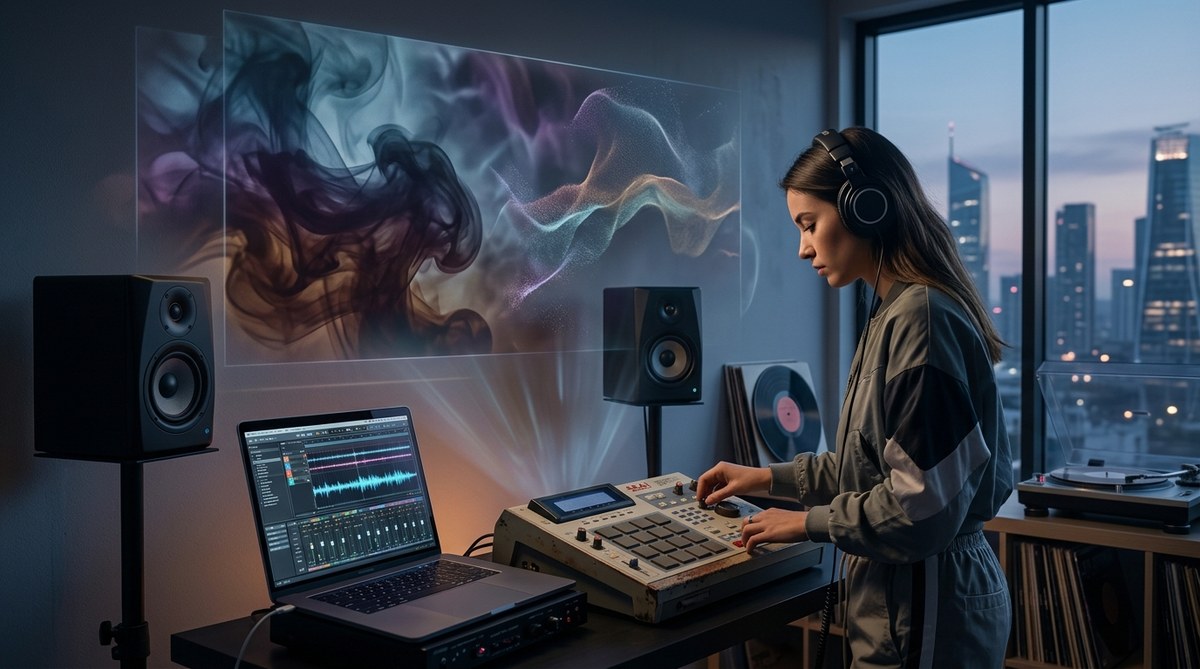
Trip-hop was supposed to stay in the 90s, right? That slow, smoky blend of hip-hop breakbeats, jazz samples, and ethereal vocals felt locked in a time capsule with cargo pants and dial-up internet. But something unexpected happened. By 2026, the genre is everywhere again. You hear it in viral bedroom pop tracks, in the atmospheric layers of a new HBO series score, and in the headphone-friendly productions of artists who weren’t even born when “Dummy” dropped. The trip-hop revival is not just nostalgia. It is a full-blown creative movement that is reshaping how modern music sounds.
Trip-hop’s 2026 resurgence is driven by Gen Z and millennial producers who crave tactile, sample-based production over sterile digital workflows. The genre’s gritty texture, slow tempos, and emotional depth offer a perfect counterweight to high-energy pop. This revival is about taking classic 90s elements and reimagining them with modern gear and distribution.
Why Trip-Hop Is Making a Comeback in 2026
The reasons are layered, much like the genre itself. First, there is a growing fatigue with hyper-polished, algorithm-driven pop. Listeners want music that feels human, imperfect, and lived in. Trip-hop delivers exactly that with its hissing tape loops, off-kilter drum patterns, and vocals that sound like they were recorded at 3 AM in a rainy apartment.
Second, the tools have never been more accessible. Samplers like the Roland SP-404MKII and software like Ableton Live make it easy to chop up dusty records and build those signature lo-fi beats. At the same time, streaming platforms and social media have erased genre boundaries. A producer in Atlanta can sample a Bulgarian folk choir, layer it over a Bristol-style beat, and reach millions of ears overnight.
Finally, the 30-year nostalgia cycle is real. Many of today’s most influential artists grew up hearing Portishead, Massive Attack, and Tricky on their parents’ stereos or through YouTube rabbit holes. They are now old enough to put their own spin on those sounds. This trip-hop revival is not a museum piece. It is a conversation between two eras.
The Key Ingredients of the Trip-Hop Sound
Before you start producing, it helps to understand the core elements that make a track feel like trip-hop. Here is a breakdown of what you need in your sonic toolbox.
| Element | Description | Modern Example |
|---|---|---|
| Slowed breakbeats | Typically 80 to 90 BPM, often swung or shuffled | A chopped Amen break pitched down with heavy compression |
| Deep sub-bass | Low, rumbling basslines that provide weight | A synth bass played on a Moog or a sampled upright bass |
| Dusty samples | Vinyl crackle, piano riffs, orchestral stabs | A 1960s soundtrack sample with the high end rolled off |
| Ethereal or whispered vocals | Often layered, with plenty of reverb and delay | A female vocalist humming over a reversed tape echo |
| Heavy effects | Vinyl simulation, tape saturation, room reverb | A combination of RC-20 and Valhalla Room for texture |
If you want to go deeper into the production side, check out our guide on mastering drum programming for contemporary music production. It covers the techniques that apply directly to trip-hop beats.
How to Produce a Modern Trip-Hop Track
Let’s turn theory into action. Follow these six steps to create a track that channels the spirit of the revival while sounding fresh for 2026.
-
Find a sample with soul. Look for old jazz, blues, or film scores on YouTube or your local record store. Choose something with a simple melody or a poignant chord progression. Chop it into pieces and rearrange them to create a new harmonic structure.
-
Build a beat that breathes. Trip-hop beats are slow but not stiff. Program your kick on the one and the three, but let the snare or clap drift slightly behind the grid. Add ghost notes on the hi-hats to create a shuffle. Swing is everything.
-
Layer a sub-bass line. Use a sine wave or a sampled bass note that follows the root of your chords. Keep it simple. Trip-hop bass is more about feeling than flashy runs.
-
Add atmospheric textures. Reverse a section of your sample and let it play underneath the verse. Add vinyl crackle, field recordings, or the sound of a distant rainstorm. These layers create the cinematic space that defines the genre.
-
Record or find a vulnerable vocal. If you sing, record yourself in a quiet room with a single microphone. Apply a high-pass filter to remove low rumble, then saturate the track with a tape plugin. If you don’t sing, find acapellas from royalty-free libraries and treat them as instruments.
-
Mix with intention. Use heavy compression on the drum bus to glue everything together. Keep the master output around -14 LUFS to preserve dynamic range. Less loudness, more feeling.
For those who want to upgrade their home studio for this kind of sound, take a look at our recommendations for essential music gear upgrades for modern producers in 2026. Items like a good audio interface and a pair of open-back headphones make a real difference.
Common Pitfalls in Trip-Hop Production
Even experienced producers can fall into traps when trying to capture the trip-hop vibe. Here are the most frequent mistakes and how to fix them.
| Mistake | Why It Hurts | The Fix |
|---|---|---|
| Overproducing the beat | Too many drum hits kill the hypnotic groove | Stick to a kick, snare, hi-hat, and one or two percussion layers |
| Sterile digital samples | Clean samples sound lifeless in this genre | Apply vinyl emulation and tape wow/flutter to everything |
| Loud, bright vocals | Crisp modern vocals clash with the gritty instrumentation | Use a low-pass filter and add saturation to dull the top end |
| Ignoring the low end | A weak sub-bass leaves the track feeling empty | Layer a sine wave below your sampled bass, but keep it subtle |
What Today’s Artists Are Doing Differently
The trip-hop revival is not a carbon copy of the 90s. Modern producers are bringing new influences and techniques to the table. I spoke with a producer who goes by the name Wavemother, known for her 2025 album “Fog City.” She shared her perspective.
“Back in the 90s, you had to piece everything together with hardware samplers and a lot of patience. Today I can do the same thing in an hour on my laptop. But the danger is losing the happy accidents. I purposely use old equipment like an SP-404 to force limitations. That grit you hear in my track ‘Neon Dusk’ came from a single sample that was too distorted, but I kept it anyway. The revival is about embracing imperfection as a creative tool.”
This approach explains why so many revival tracks use analog modeling plugins, cassette tape emulators, and digital clipping. The goal is not to sound vintage. It is to sound real.
Essential Gear and Software for the Trip-Hop Revival
You do not need a huge budget to start. Here is a list of tools that reliably help producers nail the trip-hop aesthetic.
- Hardware sampler (SP-404MKII or MPC One) for hands-on beat chopping
- DAW (Ableton Live or Logic Pro) for arranging and mixing
- Tape saturation plugin (Waves J37 or Softube Tape) for warmth
- Vinyl simulation plugin (iZotope Vinyl or Wavesfactory Cassette) for texture
- Reverb (Valhalla VintageVerb or Eventide Blackhole) for spaciousness
- Compressor (The Glue or API 2500) for drum bus gluing
- Field recorder (Zoom H1n) for capturing your own ambient sounds
For a broader look at the tools shaping music right now, read our piece on top music gear trends every producer should know in 2026. It covers the latest synths, controllers, and plugins that fit perfectly into a trip-hop workflow.
Where Trip-Hop Is Heading After 2026
The revival is still gaining momentum. Listeners are hungry for more than just beats. They want mood, story, and texture. Trip-hop offers all three. In the next few years, expect to see the genre blending even more with other styles. Already, artists are folding trip-hop influences into hyperpop, ambient, and even country music. The core elements of slow tempos, heavy bass, and vintage texture will continue to spread.
This is a perfect time to start experimenting. Whether you are producing your first beat or your hundredth, the trip-hop revival invites you to slow down, listen closely, and make something that feels honest. Fire up your sampler, dig through those old records, and let the dust do the work. The sound of 2026 is waiting.
About the Author
