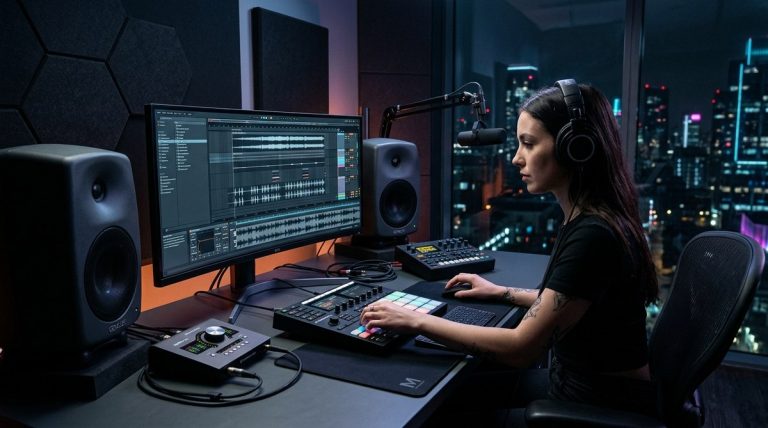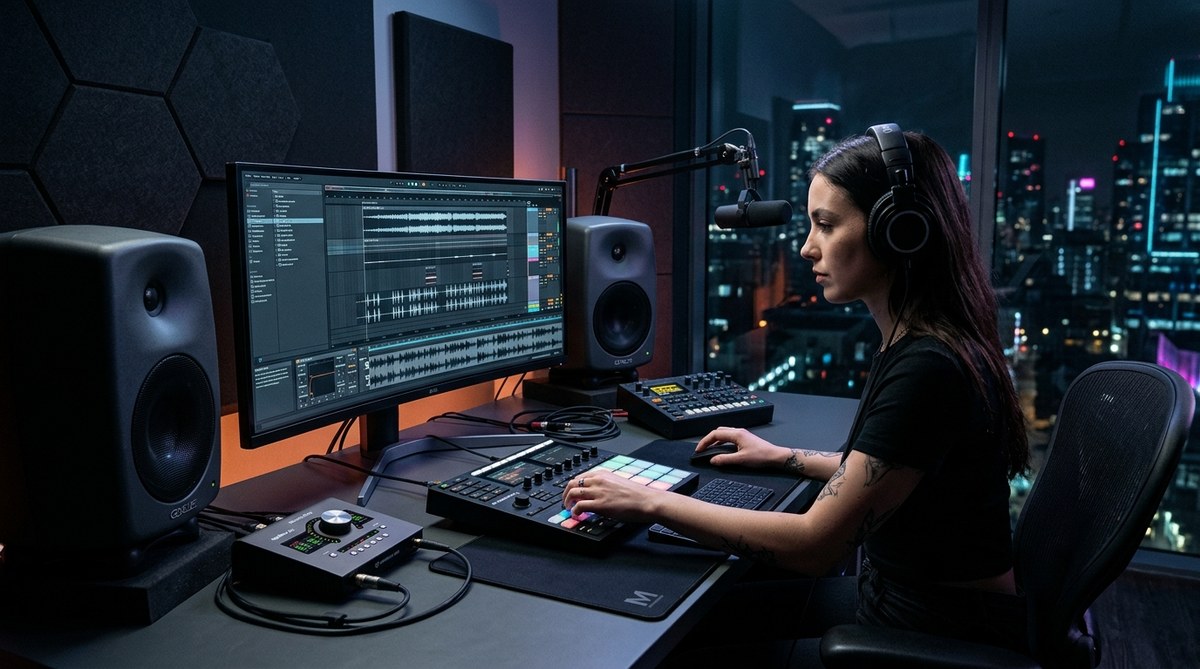
Grime has always been about tension. The genre lives in the space between a rattling sub-bass and a snare that cuts through concrete. In 2026, the tools have changed but the mission stays the same: make something that shakes the floor and the chest at the same time. If you want to know how to produce grime music in 2026 that actually connects, you need to focus on the details that separate a bedroom experiment from a track that gets played out.
Grime in 2026 rewards producers who balance weight with clarity. Focus on a tight drum pattern, a sub-bass that leaves room for the kick, and a vocal chain that keeps intelligibility. Use modern saturation tools to add grit without losing headroom. Reference tracks from the last two years, not the 2000s. Your mix should feel dangerous, not muddy.
Start with the Rhythm Foundation
Grime drums are not complicated. They are intentional. A standard pattern uses a kick on the one and the three, a snare or clap on the two and the four, and a hi-hat pattern that shuffles. The tempo usually sits between 135 and 145 BPM. What makes a grime beat hit in 2026 is the sound design behind those simple hits.
You want a kick that punches through a dense mix. Layer a short transient from a sample pack with a sub-heavy 808 kick that lasts no longer than an eighth note. Tune the kick to the root note of your bassline so they lock together. For the snare, think about a tight crack with a short reverb tail. Too much reverb and your beat sounds like a rock ballad. Too little and it feels dry.
Here is a practical workflow for grime drums in 2026:
- Start with a clean 16th-note hi-hat pattern. Swing the off-beats slightly for a human feel.
- Add a kick on every quarter note, then remove the second and fourth kick to leave space.
- Layer a snare sample that has a strong mid-range crack around 200 Hz.
- Use a transient shaper on the drum bus to tighten the attack.
- Sidechain the bass to the kick using a ratio of 4:1 or higher for a pumping effect.
If you want to refine your drum programming further, check out our guide on mastering drum programming for contemporary music production. It covers layering and velocity editing that applies directly to grime.
The Bass: Where Grime Gets Its Weight
The bass in grime is not just a low end. It is the melody, the hook, and the tension builder. In 2026, producers are moving away from pure sine wave subs and adding harmonic content through saturation and distortion. A clean sub is still essential, but the mid-bass layer is what makes the track sound aggressive on smaller speakers.
Start with a sine wave sub at -6 dB. Then duplicate the channel and add a wave table synth playing the same notes an octave higher. Apply a low-pass filter around 400 Hz and saturate it with a plugin like Decapitator or a tape emulator. This adds harmonics that make the bass audible on phone speakers without ruining the sub.
Keep your bass pattern simple. Most classic grime tracks use a two-bar loop with a variation on the fourth bar. The rhythm of the bass should follow the kick pattern closely. When the kick hits, the bass should either play the same note or rest briefly. This creates that locked-in groove.
One mistake producers make is adding too many bass layers. Three layers max: sub, mid, and a texture layer like a filtered saw wave. Anything more creates phase issues and eats up headroom. If you are curious about how modern technology is shaping these techniques, read about how modern technology is transforming music styles and production.
Vocal Processing for the 2026 Grime Sound
Grime vocals need to sit on top of the mix without fighting the bass. The vocal chain should prioritize clarity and presence. Start with a clean recording. Even if you are using a budget microphone, the performance matters more than the gear.
Here is a vocal chain that works for grime in 2026:
- High-pass filter at 100 Hz to remove rumble.
- A gentle de-esser to tame sibilance around 7 kHz.
- A compressor with a ratio of 3:1 and a fast attack to catch peaks.
- A slight boost at 2 kHz for presence.
- A short reverb with a decay under one second to add space without washing out.
For the aggressive, in-your-face style that grime demands, try parallel compression. Send the vocal to a bus with a compressor set to a 10:1 ratio and blend it back in. This adds density without making the vocal sound squashed.
Many producers also use a pitch-shifted layer an octave below the main vocal. This adds weight for drops and chorus sections. Just keep the level low, around -12 dB relative to the main vocal, so it adds body without turning into a mud fest.
Arrangement and Energy Flow
Grime tracks are short and to the point. A standard structure looks like this:
- Intro (8 bars): Kick and hi-hat only.
- Build (8 bars): Add bass, maybe a filtered vocal sample.
- Drop (16 bars): Full drums, bass, and main vocal.
- Breakdown (8 bars): Strip back to drums and a pad.
- Second drop (16 bars): Add a new element like a synth lead.
- Outro (8 bars): Fade out the layers.
The key is to remove elements between sections so the drops feel huge. Do not be afraid of silence or near-silence. A bar with only a kick and a distant vocal sample creates anticipation.
Use risers and downlifters sparingly. A white noise sweep that starts eight bars before the drop and cuts off on the first beat of the drop works every time. For the riser, automate a high-pass filter on a noise generator. For the downlifter, use a low-pass filter with a pitch drop.
Common Mistakes and How to Fix Them
| Mistake | Why It Happens | Fix |
|---|---|---|
| Muddy low end | Too many bass layers | Limit to three layers; check phase |
| Weak snare | Snare lacks mid-range | Add a 200 Hz boost or layer a clap |
| Vocals buried | No sidechain or EQ cuts | Sidechain the bass to the vocal |
| Dull hi-hats | No high-end shaping | Use a shelf boost at 10 kHz |
| Mix sounds flat | No saturation | Apply tape or tube saturation on the master bus |
If you are dealing with a muddy low end, a simple fix is to check your mix in mono. If the bass disappears or gets louder, you have phase cancellation. Flip the phase on one of your bass layers until the low end feels solid.
For producers who want to stay ahead of the curve, keeping up with top music gear trends every producer should know in 2026 can help you choose tools that fit your workflow.
Mixing and Mastering for Streaming Platforms
In 2026, most grime tracks are consumed on streaming services. That means your master needs to hit around -14 LUFS for Spotify and Apple Music. Do not squash your mix to -8 LUFS just to be loud. The platforms will turn you down anyway, and you lose the dynamic range that makes grime exciting.
When you mix, aim for a mix bus level of -6 dB before mastering. Use a limiter with a ceiling of -1 dB to avoid inter-sample peaks. A clipper on the drum bus can add perceived loudness without the pumping that comes from heavy limiting.
For the final master, reference your track against a commercial grime track from 2025 or 2026. Pay attention to the bass level and the snare bite. If your track sounds thin in comparison, add a multiband compressor to the low end rather than turning up the whole mix.
“The best grime tracks sound like they are about to fall apart, but they never do. That tension comes from leaving space in the arrangement and trusting the low end to do the work.” — experienced producer quote from a 2025 studio interview.
Tools and Plugins That Work in 2026
You do not need an expensive studio to produce grime that hits hard. Here are the tools that matter:
- A DAW like Ableton Live, FL Studio, or Logic Pro.
- A sample pack with clean drum one-shots (look for 808 and 909 samples).
- A synth like Vital or Serum for bass patches.
- Saturation plugins like Softube Saturation Knob or the stock saturator in your DAW.
- A transient shaper for drums.
- A good set of headphones or monitors with flat response.
If you are using stock plugins, that is fine. Learn the tools you have before buying new ones. A well-placed EQ cut is worth more than a expensive compressor.
For producers who want to understand how different styles influence each other, the guide on the art of genre blending: creating your own signature sound in 2026 offers ideas for incorporating elements from other genres without losing the grime identity.
Building a Track from Start to Finish
Let us walk through a practical session. Open your DAW, set the tempo to 140 BPM, and follow these steps:
- Program a basic kick and snare pattern on the grid. Kick on 1 and 3, snare on 2 and 4.
- Add a hi-hat pattern with 16th notes. Remove a few hits to create a shuffle.
- Write a bassline that follows the kick. Use root notes and a fifth.
- Add a simple synth pad playing a minor chord. Filter it so it sits behind the bass.
- Record or import a vocal sample. Apply the vocal chain from earlier.
- Arrange the track into intro, build, drop, breakdown, and outro.
- Mix the elements so the kick and bass are the loudest elements.
- Export and master to -14 LUFS.
This process takes about two to three hours for a rough draft. The real work happens in the editing and mixing stage. Do not rush the arrangement. A good arrangement makes mixing easier.
Staying Inspired and Avoiding Burnout
Grime production can feel repetitive because the patterns are simple. To stay inspired, listen to non-grime music and try to borrow one element. Maybe a synth texture from a techno track or a drum fill from a jungle track. Blend it into your grime project and see what happens.
Another tactic is to limit yourself. Use only one synthesizer for an entire track. Constraints force creativity. If you only have three sounds, you will make those three sounds work together.
For more ideas on how to spot fresh sounds, the article on how to spot the next big genre before it hits the mainstream can help you identify trends before they flood the market.
Your Next Step
Producing grime in 2026 is about understanding the fundamentals and applying them with modern tools. Start with a simple beat, build a bassline that locks with the kick, and treat your vocals with care. The rest is arrangement and taste. Do not overthink it. Make a track, finish it, and start the next one. Each track teaches you something new about your workflow and your sound. The producers who improve are the ones who finish songs, not the ones who collect plugins. Open your DAW today and make the first eight bars. That is all it takes to begin.
About the Author