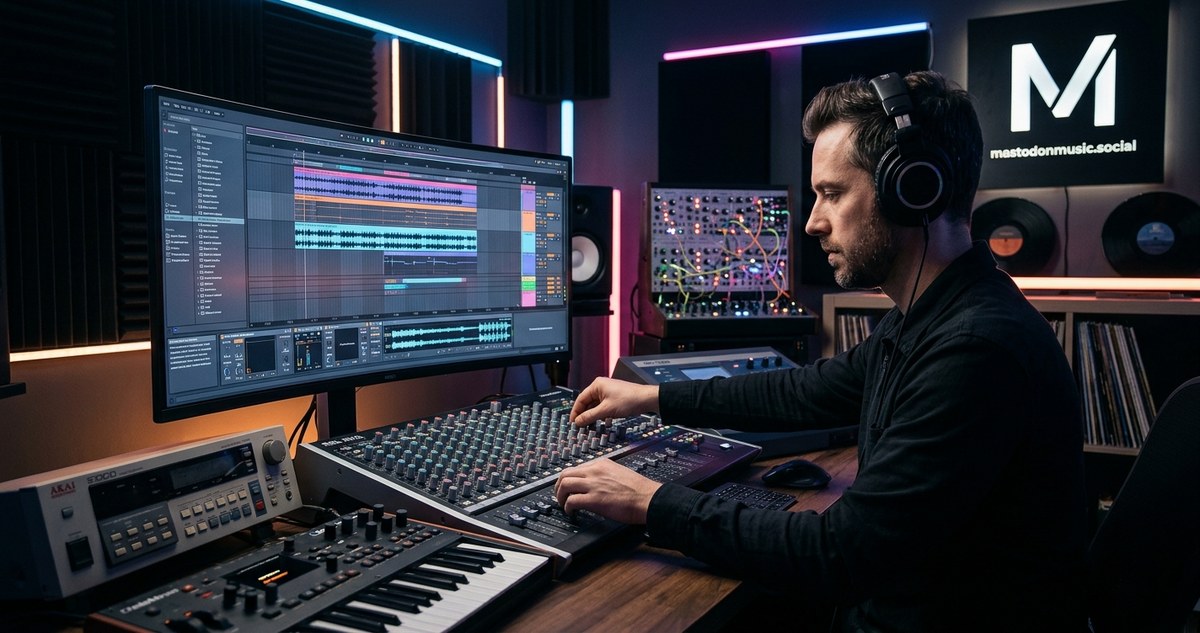
The skippy snare, the frantic hi-hat, the bassline that makes the whole room bounce. Breakbeat in the 90s was the sound of a generation losing it in warehouses, illegal raves, and sweaty clubs. Today, that energy is back. Producers are dusting off their Amen Brother records and splicing them into tracks that feel both nostalgic and completely current. If you want to make a 90s breakbeat track that actually works on a 2026 dancefloor, you need more than just a chopped loop. You need the right swing, the right grit, and the right arrangement.
To make a 90s breakbeat track for 2026, focus on authentic drum chopping from classic funk breaks, layer in a sub-heavy bassline, and add modern production polish without losing the raw energy. Use tape saturation and subtle sidechain compression to glue the mix. Keep arrangements dynamic with builds and drops that suit a club environment.
The Foundation: Sourcing and Chopping Your Break
The heart of any breakbeat track is the break itself. In the 90s, producers sampled old funk and soul records. The most famous is the Amen Break from “Amen, Brother” by The Winstons. You also have the Think Break from “Think (About It)” by Lyn Collins, and the Funky Drummer from James Brown.
You can find high-quality royalty-free versions of these breaks online. Or you can record your own live drums and treat them with vintage effects. The key is the feel.
- Find a raw break. Start with a recording that has a live, human feel. Avoid sterile, quantized drum machines.
- Chop it up. Slice the break into individual hits (kick, snare, hi-hat). Then rearrange them. The 90s sound comes from skipping the snare, adding extra hi-hats, and creating a syncopated pattern that feels like it is stumbling forward.
- Layer a kick. The original break often has a weak kick drum. Layer a modern, punchy kick underneath to give the track weight. Tune the kick to the root note of your bassline.
- Add a snare layer. Find a snappy snare sound with a bit of room reverb. Place it on the 2 and the 4, but let the chopped break do the ghost notes and fills.
“The magic of breakbeat is in the mistakes. Do not quantize everything to a grid. Let the swing breathe. That human error is what makes people move.” – Old school producer wisdom.
Building the Bassline That Shakes the Room
A breakbeat track without a fat bassline is just a drum solo. In the 90s, producers used the Moog Taurus, the Roland TB-303, or simple sine wave patches. For 2026, you want a sub-bass that hits hard on a club system, but keep the mid-range gritty.
Use a bass synth with a filter envelope. Program a simple pattern that follows the root notes of your chords. Let the filter open slightly on the first beat of each bar. This creates movement without being busy.
A common mistake is making the bassline too complex. The break is already busy. The bass should lock in with the kick drum and provide a solid foundation. Use sidechain compression on the bass. Duck it slightly every time the kick hits. This creates a pumping effect that is essential for modern dance music.
The 90s Palette: Samples, Stabs, and Atmosphere
The 90s breakbeat sound was built on samples. Think string stabs, spoken word snippets, and short horn hits. You can find sample packs dedicated to this era.
- String stabs: Layer a short, sharp string sample on the off-beats. This creates tension.
- Vocal snippets: Find a short, repeating vocal phrase. It could be a single word or a breath. Process it with reverb and delay.
- Piano or organ: A simple two-chord piano loop can carry the whole track. Add a bit of chorus or phaser for that 90s feel.
Do not overdo it. Pick two or three main melodic elements. The break is the star. Everything else should support it.
Arrangement for the 2026 Dancefloor
A 90s breakbeat track might have been a 7-minute epic with long breakdowns. For 2026, you need to hook the listener in the first 30 seconds. DJs want tracks that mix easily and have clear energy peaks.
Here is a simple arrangement template:
- Intro (0:00 – 0:30): Just the chopped break and a hi-hat. No bass. Let the groove establish itself.
- Build (0:30 – 1:00): Add a filtered bassline. Bring in a string stab or a vocal snippet. Increase the energy slowly.
- Drop (1:00 – 1:30): All elements come in. Full bass, full drums, main melody. This is the hook.
- Breakdown (1:30 – 2:30): Strip it back to just the break and maybe a pad. Build tension with risers and snare rolls.
- Second Drop (2:30 – 4:00): Bring everything back. This time, add a new layer. Maybe a different vocal sample or a synth lead.
Mixing for Grit and Power
Mixing breakbeat is a balancing act. You want it to sound raw but also loud enough for a club.
| Element | 90s Approach | 2026 Approach | Common Mistake |
|---|---|---|---|
| Drums | Recorded hot to tape, lots of natural saturation. | Use software tape emulation and subtle clipping. | Over-compressing the drum bus. |
| Bass | Simple sine wave, often mono. | Wide sub-bass with a gritty mid-layer. | Letting the bass fight the kick. |
| Melody | Sampled from vinyl, often with crackle. | Use high-quality samples, add vinyl noise in the background. | Using too many different samples. |
| Mastering | Low headroom, dynamic range. | Loud but with controlled dynamics. | Squashing the life out of the track. |
Use a bus compressor on your drum group. A classic SSL-style compressor works well. Set the attack to slow (30ms) and release to fast (100ms). This lets the transients punch through while gluing the hits together.
Essential Gear and Plugins for the Sound
You do not need expensive hardware. But a few key tools make a big difference.
- A good sampler: Ableton Simpler, Logic EXS24, or a dedicated sampler like TAL-Sampler.
- Tape saturation plugin: Something like Waves J37 or Softube Tape.
- A filter plugin: The sound of a resonant low-pass filter is crucial. Use automation to open and close it.
- A vintage reverb: Plate or hall reverb for the snare and vocals. Avoid clean, pristine digital reverbs.
If you want to learn more about building a home studio that can handle this sound, check out our guide on essential music gear upgrades for modern producers in 2026. The right tools can save you hours of mixing time.
From DAW to Dancefloor
You have the track. Now test it. Play it on different systems. In your car. On cheap headphones. On a big speaker. Does the kick punch? Does the bass rumble? Does the break still swing?
A common issue is the track sounding thin on a phone speaker. Make sure your hi-hats and snare have some presence in the 3kHz to 5kHz range. This ensures the track cuts through even on smaller speakers.
Also, check the key. Many 90s breakbeat tracks were in minor keys like D minor or E minor. These keys sound powerful on sub-heavy systems. If your bassline sounds muddy, try moving it up an octave or changing the root note.
The Secret Weapon: Generative Drum Fills
One trick that separates amateur breakbeat from pro breakbeat is the use of generative fills. Instead of manually programming every fill, set up a MIDI effect that randomly triggers short snare rolls or hi-hat flams.
In Ableton, you can use the Random MIDI effect. Set it to trigger a snare hit on a 16th note grid with a 20% probability. Only let it play for one bar every 8 bars. This creates unpredictable, human-sounding fills that keep the track fresh.
For more on programming complex drum patterns, read our guide on mastering drum programming for contemporary music production. It covers techniques that work across all genres.
Final Polish: The 2026 Touch
The 90s were about rawness. 2026 is about clarity with character. Your final mix should have:
- A clear low end that does not distort.
- A snare that cuts through the mix.
- A sense of space from reverb and delay.
- A master that is loud but not brickwalled.
Do not be afraid to leave some grit. A little bit of distortion on the master bus can glue everything together. Just use a multiband compressor to keep the low end clean.
Your First Breakbeat Track Starts Now
Making a 90s breakbeat track for 2026 is not about copying the past. It is about capturing that feeling of chaos and energy and presenting it with modern clarity. Start with a great break. Keep your arrangement focused. Trust your ears over the meters.
Load up your DAW. Find that old funk sample. And start chopping. The dancefloor is waiting.
For more insight on how older genres are shaping modern sounds, look at how jungle and drum and bass are shaping the future of electronic music in 2026. The same energy that drove those genres is alive in breakbeat today.
About the Author