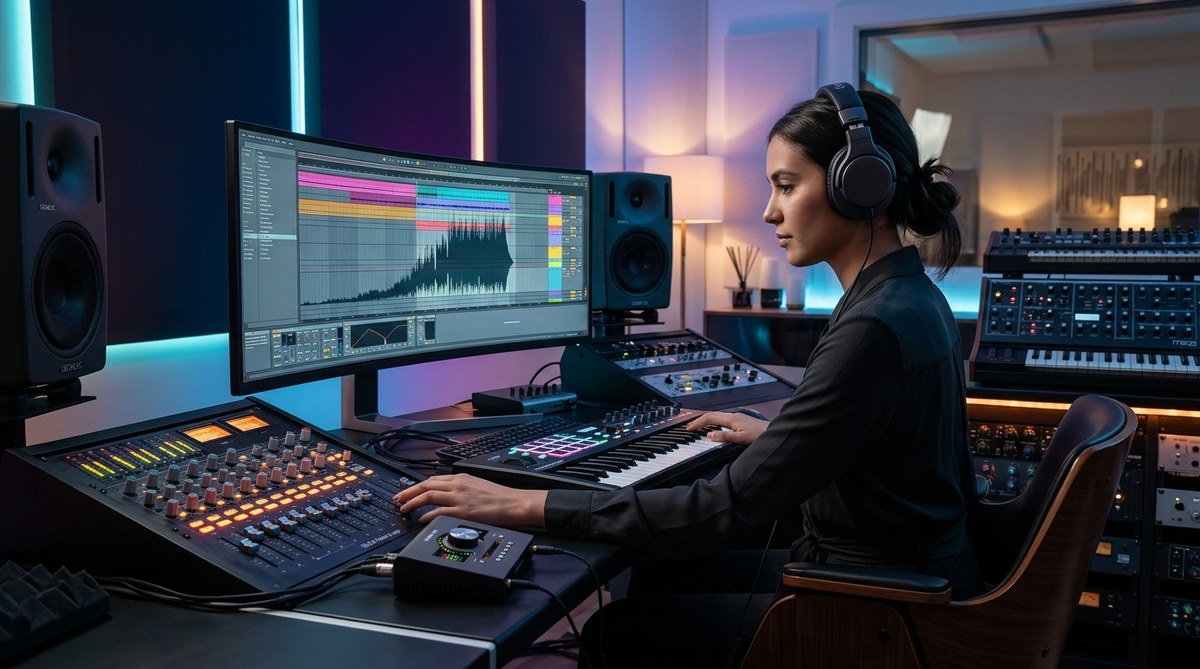
Building a progressive trance track that makes people close their eyes and feel something real is one of the most satisfying things you can do in a studio. The genre lives on long buildups, subtle shifts in texture, and that one moment where everything locks into place. If you have been making electronic music for a little while but your drops still feel flat or your breakdowns lack tension, this progressive trance production tutorial will walk you through the exact process.
Building an emotional climax in progressive trance requires layering tension through arrangement, sound design, and mix automation. You need a strong chord progression, a filtered bassline that opens up over time, and a lead melody that lands at the peak. The secret is controlling energy across the full track length, not just the last 16 bars.
Start with a Chord Progression That Breathes
Every great progressive trance track begins with harmony that has room to grow. You want chords that feel stable but leave space for movement. Minor seventh chords work well here. Try a progression like Am7, Fmaj7, Cmaj7, G. This gives you a melancholic, floating feel that is common in the genre.
Use a soft pad sound with a slow attack. A low pass filter around 300 Hz keeps the low end clean. Let the chord progression play for 8 or 16 bars before introducing anything else. This establishes a foundation and lets the listener settle into the mood.
If you want more ideas on how to blend harmonic concepts across styles, check out how to weave jazz harmonies into modern electronic production. The same principles apply to building richer chord voicings in trance.
Build the Kick and Bass Relationship
Progressive trance demands a kick that cuts through without overpowering the mix. A 909 style kick with a short decay works perfectly. Tune the kick’s fundamental to the root note of your chord progression. This makes the bass and kick lock together.
Write a bassline that plays a simple pattern. A root note on the first beat, then a fifth or octave on the third beat. Keep the bassline filtered for the first section of the track. Use an automated low pass filter that opens slowly over 32 bars. This creates forward motion without needing a new melody.
For more on programming solid drum patterns, read mastering drum programming for contemporary music production. The techniques apply directly to making your kick and percussion feel alive.
Arrange in Layers of Energy
Progressive trance is not about dropping everything at once. It is about peeling back layers and adding them again with more intensity. Here is a numbered list that breaks down the arrangement process:
- Intro (0:00 to 1:00): Kick, hi hats, and a filtered pad. No bassline yet. Keep the energy low.
- Build (1:00 to 2:30): Bring in the bassline with a closed filter. Add a simple arpeggio on a pluck synth. Introduce a clap or snare on beat 2 and 4.
- Breakdown (2:30 to 3:30): Cut the kick and bass. Let the pad and arpeggio breathe. Add a new melodic element like a lead synth playing a long note.
- Climax buildup (3:30 to 4:15): Bring the kick back but keep the bass filtered. Layer a white noise riser. Increase the reverb on the lead synth.
- Climax (4:15 to 5:00): Open the bass filter fully. Add a second lead line an octave higher. Bring in a ride cymbal for extra energy.
- Outro (5:00 to 6:00): Strip away layers one by one. End with the pad and a single hi hat.
This structure gives the listener time to connect with each element. The climax hits harder because you built anticipation over several minutes.
Use Automation to Shape Emotion
Automation is the secret weapon in this genre. Every parameter that can move should move. Filter cutoff, reverb wetness, volume, panning, and distortion amount all play a role.
Start by automating the filter on your bassline. Draw a slow curve that opens from 200 Hz to 1 kHz over 32 bars. Do the same for your lead synth but start the automation later. This creates a sense of the track “opening up.”
Reverb automation is just as important. Increase the reverb send on your lead during the breakdown. This makes the sound feel distant and emotional. Right before the climax, reduce the reverb to bring the lead forward. The sudden dryness makes the sound hit harder.
A table can help you visualize common automation moves and the mistakes producers make:
| Automation Target | Correct Technique | Common Mistake |
|---|---|---|
| Bass filter cutoff | Slow ramp from 200 Hz to 1 kHz over 32 bars | Opening the filter too early or too fast |
| Reverb send on leads | Increase during breakdown, cut before climax | Leaving reverb high during the drop |
| White noise volume | Fade in over 16 bars before climax | Using the same noise sample every time |
| Lead synth volume | Automate a gentle 2 dB boost at the peak | Clipping the master from too much gain |
“The best progressive trance producers treat automation like a second melody. It is not just about changing levels. It is about telling a story with movement.” This advice from a veteran engineer changed how I approach every session.
Choose the Right Lead Sounds
Your lead melody needs to cut through the mix without sounding harsh. A supersaw with a gentle low pass filter works well. Stack two or three layers: one for the body, one for the attack, and one for the high end shimmer.
Write a melody that starts on a chord tone and moves stepwise. Avoid large interval jumps. Progressive trance melodies feel more like long breaths than technical runs. Hold notes for 2 or 4 bars. Let the space between notes create tension.
If you want to stay current with the tools that help shape these sounds, look at top music gear trends every producer should know in 2026. New synths and plugins make layering leads much easier.
Add Percussion That Drives Forward
Progressive trance percussion is minimal but purposeful. Hi hats on eighth notes with a slight swing keep the rhythm moving. Add a shaker on the off beats for texture. Use a rimshot or a short clap on beats 2 and 4.
Automate the volume of the hi hats. Make them louder as the track progresses. This creates a sense of acceleration without changing the tempo.
For a deeper look at building rhythm sections, the guide on mastering drum programming for contemporary music production has excellent examples that translate well into progressive trance.
Process the Mix for the Climax
Your mix needs to sound wide and deep during the breakdown, then become focused and powerful at the climax. Use stereo widening on the pad and arpeggio during the breakdown. When the climax hits, collapse the stereo field on the kick and bass to keep them centered.
Sidechain compression is essential. Route your kick to trigger a compressor on the bass and pad. Use a release time of around 100 ms. This creates the classic pumping effect that drives the energy.
Here is a bulleted list of mixing checks to run before you finalize the track:
- Check that the kick peaks at -6 dB on the master bus
- Make sure the bass sits 3 to 4 dB below the kick
- Verify that the lead melody is audible on small speakers
- Listen for muddiness in the 200 to 400 Hz range and cut if needed
- Confirm that the white noise riser does not overpower the lead
If you need a refresher on getting professional sound at home, read essential techniques for achieving professional sound in home studio productions. The advice on room treatment and monitoring applies directly to trance mixing.
Test Your Track in Different Environments
What sounds huge on studio monitors might fall apart on headphones or a club system. Export a rough mix and listen on earbuds, car speakers, and a Bluetooth speaker. Take notes on what gets lost.
Often the bass sounds fine in the studio but disappears in other systems. If that happens, add a subtle sine wave layer to your bass at the root note. This reinforces the low end without changing the character.
For more on gear that helps you test mixes accurately, check out how to choose the perfect audio tech for your music style. A good pair of open back headphones can reveal issues you miss on monitors.
Trust the Long Build
The biggest mistake producers make in progressive trance is rushing. They add too many elements too early. They bring the bassline in at 30 seconds. They use a riser that peaks too soon. The result is a track that feels frantic instead of emotional.
Let the arrangement breathe. If you feel like something is missing, wait 8 more bars before adding it. The listener needs time to absorb each layer. The climax only feels earned if the journey to get there was patient.
Staying aware of current trends can also help you understand what listeners expect. Exploring emerging music trends that are redefining the industry in 2026 covers shifts in electronic music that might influence your next track.
Keep Refining Your Sound
Progressive trance is a genre that rewards attention to detail. Every filter sweep, every reverb tail, and every volume automation matters. The more you practice building these elements into your arrangement, the more natural the process becomes.
Open your DAW right now. Start with a simple chord progression. Write a bassline that stays filtered for the first 32 bars. Build a lead melody that lands on a single long note at the climax. Automate one filter and one reverb send. Listen back and see if the emotion hits. If it does not, adjust the timing of your automation and try again. That is how you grow as a producer.
About the Author