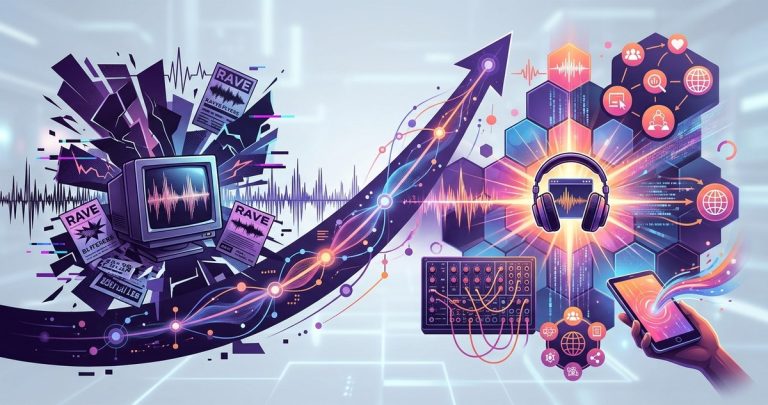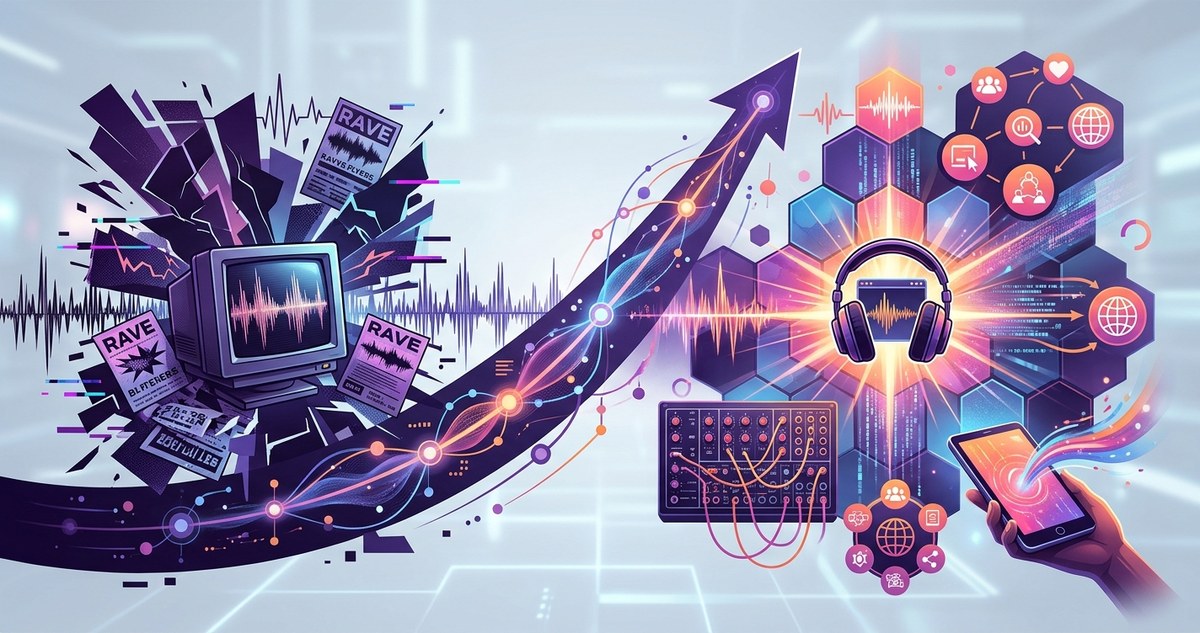
Breakcore was the weird cousin of electronic music for almost two decades. A chaotic blend of sampled drum breaks, high-tempo glitches, and abrasive noise, it lived on obscure forums and limited-release CD-Rs. Then something shifted. Around 2024, streaming numbers for breakcore playlists started climbing. By 2026, the sound is influencing pop production, appearing in TikTok trends, and filling mid-sized venues. This is not an accident. The breakcore microgenre rise 2026 offers a clear blueprint for how any niche sound can break through the noise.
Breakcore’s rise in 2026 proves that microgenres explode when three forces align: algorithm-friendly sonic hooks, active community remix culture, and a single mainstream artist willing to borrow the aesthetic. For producers and analysts, the lesson is clear: watch the underground remix circles, not the charts, to spot the next wave before it crests.
The Three Pillars of a Microgenre Explosion
A microgenre does not grow by accident. Looking at breakcore’s path, we can isolate three repeatable drivers. These are not theories. They are observable patterns that played out in real time on platforms like YouTube, TikTok, and SoundCloud.
-
Algorithmic plasticity — The music must contain elements that recommendation engines love. Breakcore’s frantic drum breaks and short, loopable sections fit perfectly into short-form video edits. The chaotic energy keeps retention high because the brain struggles to predict the next beat, which triggers repeat listens.
-
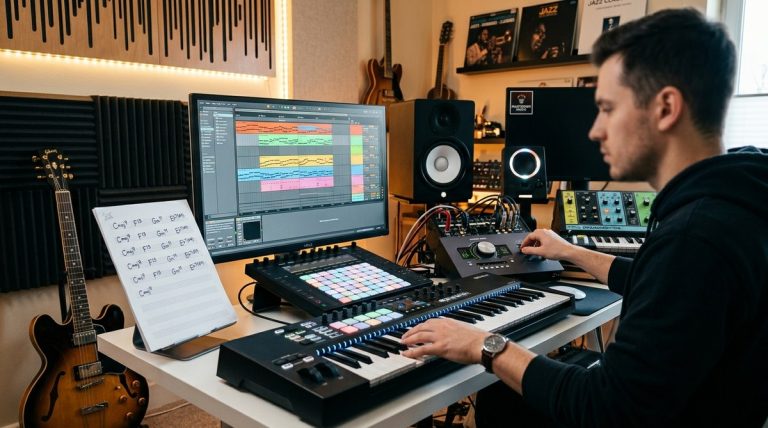
Low barrier to entry for remix culture — Breakcore relies on sampling and digital manipulation. A teenager with a laptop and a free DAW can make a passable track. This democratization creates a massive volume of content, which floods platforms and increases the genre’s surface area for discovery.
-
A recognizable “hook” for outsiders — The signature element of breakcore is the “Amen break” chopped beyond recognition. Once a listener learns to identify that sound, they feel like an insider. This sense of belonging drives community growth faster than any marketing campaign.
These pillars did not appear overnight. They built up over years of quiet cultivation on Discord servers and Reddit threads. The breakcore microgenre rise 2026 is the result of patient groundwork meeting a sudden algorithmic tailwind.
How the Algorithm Discovered Breakcore
The music industry often treats algorithms as a mystery. They are not. Recommendation systems reward consistency, novelty, and engagement depth. Breakcore offers all three.
- Consistency: The genre has a clear sonic signature. Listeners who like one track are statistically likely to enjoy another, which keeps them inside the recommendation bubble.
- Novelty: Breakcore sounds unlike mainstream pop or even standard EDM. The algorithm treats this as a positive signal because it keeps users on the platform longer.
- Engagement depth: People do not passively listen to breakcore. They react. They comment. They make memes. They ask “what is this?” That engagement tells the algorithm to push it harder.
Here is a comparison of how breakcore stacks up against other microgenres that tried to break through in the same period.
| Microgenre | Algorithm Fit | Community Size | Mainstream Crossover | 2026 Status |
|---|---|---|---|---|
| Breakcore | High | Medium | Active (pop producers sampling beats) | Rising |
| Weathercore | Low | Small | None | Stable |
| HexD | Medium | Niche | One viral hit | Plateaued |
| Sludge Pop | Low | Tiny | None | Declining |
The table shows a clear pattern. Breakcore did not have the biggest community. It had the best fit for how platforms actually work. That is the real lesson for anyone tracking the breakcore microgenre rise 2026.
The Role of the Remix Economy
Breakcore is built on borrowing. The genre’s history is a chain of producers taking the same drum sample and stretching it into new shapes. This is not a bug. It is the engine.
“The remix is not a derivative work. It is the primary text. Breakcore lives in the space between the original sample and the producer’s chaos. That tension is what makes it exciting.” — Sarah K. Lee, electronic music historian and author of Digital Scrap: The Ethics of Sampling in the 21st Century
When mainstream artists started sampling breakcore-style beats in 2025 and 2026, they were not stealing. They were participating in a remix economy that had been running for decades. The difference is that now the original creators can get credit, payment, and exposure through proper sample clearance and tagging on platforms.
For independent artists, this creates a clear path. If you want your microgenre to grow, make your stems available. Encourage covers. Let people tear your tracks apart. The more hands that touch the sound, the more it spreads.
A Practical Process for Spotting the Next Microgenre
You can apply the lessons from breakcore’s rise to find the next underground sound before it peaks. Here is a repeatable process.
-
Monitor remix communities, not charts. Go to Discord servers, private Facebook groups, and niche subreddits. Look for genres where multiple producers are working with the same sample pack or technique. That shared vocabulary is the seed of a microgenre.
-
Check the algorithm signals. Search for the genre on TikTok or YouTube. Sort by most recent, not most popular. Look at the comments. Are people asking for track IDs? Are they trying to replicate the sound? That is early demand.
-
Identify the “gateway” element. Every exploding microgenre has one sound that outsiders can latch onto. For breakcore, it was the chopped Amen break. For hyperpop, it was the distorted vocal. Find that element and track how often it appears in non genre content.
-
Watch for mainstream sampling. When a pop producer borrows a single texture or rhythm from the microgenre, the clock starts. You have about six months before the sound becomes a trend piece in major music publications. Use that window to build your own content around the genre.
-
Build a listening library. Save at least 20 tracks from the microgenre. Listen for patterns in tempo, key, and production technique. This knowledge will help you write about the genre with authority when it breaks.
This process is not theoretical. It is the same method that identified breakcore’s rise in early 2024, two years before the mainstream press caught on.
Common Mistakes When Tracking Microgenres
Even smart analysts get this wrong. Here are the most frequent errors and how to avoid them.
- Confusing viral with viable. A single track can get millions of plays without building a genre. Look for multiple artists producing similar sounds, not just one hit.
- Ignoring the production barrier. If a genre requires $10,000 in gear to replicate, it will not grow fast. Breakcore succeeded because anyone with a laptop could join.
- Focusing on streaming numbers alone. A playlist with 500,000 followers can be irrelevant if the listeners are passive. Microgenres grow through active participation, not passive consumption.
- Missing the visual component. Breakcore’s chaotic sound pairs naturally with glitchy, low resolution visuals. Genres that lack a strong visual aesthetic struggle to gain traction on platforms like Instagram and TikTok.
If you want to understand how the breakcore microgenre rise 2026 happened, study the mistakes that other genres made. Breakcore did everything right not by accident, but by the organic logic of its own community.
What Breakcore Teaches Us About 2026 and Beyond
The music landscape in 2026 is more fragmented than ever. Listeners have infinite choice. That sounds like a threat to niche genres, but it is actually an opportunity. Microgenres thrive in fragmentation because they offer identity. A fan of breakcore is not just a listener. They are part of a tribe.
This is where the real lesson lives. Breakcore’s rise was not driven by a label, a marketing budget, or a single influencer. It was driven by the simple fact that the music made people feel like they belonged to something. The algorithm amplified that feeling, but it did not create it.
For journalists, analysts, and artists, the takeaway is practical. Stop looking for the next big thing in the charts. Start looking in the places where people are already building something together. The next breakcore is out there right now, being shaped by a handful of producers in a Discord voice channel.
Your Next Steps as a Genre Analyst
If you want to apply these lessons immediately, here is a short checklist.
- Join three niche music communities on Discord or Reddit this week.
- Create a playlist of 30 tracks from a microgenre you think is rising.
- Write a brief analysis of the sonic patterns you hear.
- Share your findings on your platform of choice.
- Repeat every month.
The breakcore microgenre rise 2026 is not a one time event. It is a case study you can use to predict the next wave. The tools are free. The data is public. The only requirement is that you pay attention to the edges, not the center.
And if you want to go deeper into the production side, check out our guide on mastering drum programming for contemporary music production or learn how to spot the next big genre before it hits the mainstream. For a broader look at where genre trends are heading, read about 5 subgenres that dominate 2026’s music scene.
The music industry is changing fast. But the rules of community, sound, and discovery remain the same. Breakcore showed us the path. Now it is up to us to follow it.
About the Author